By Toxirium Team | Estimated Reading Time: 8 Minutes
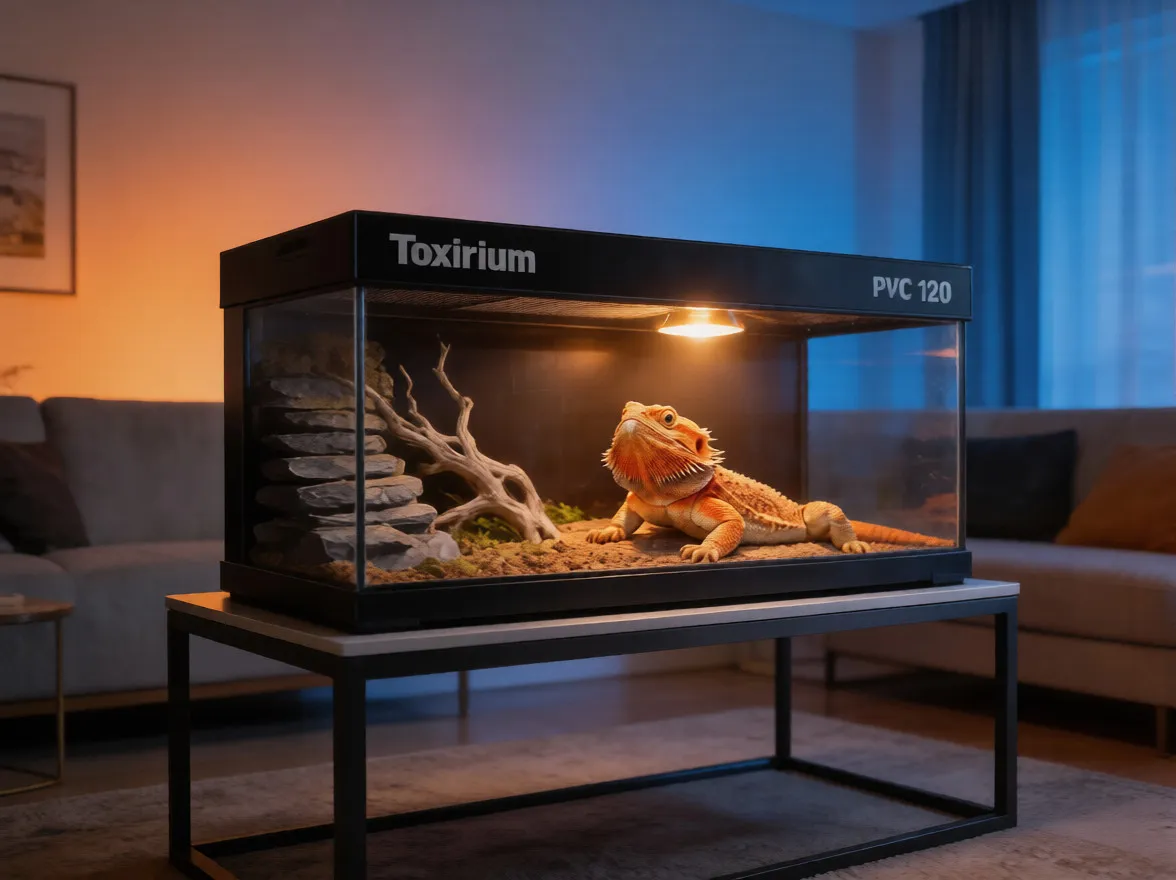
When building a habitat for your reptile, you aren’t just buying a box; you are creating a micro-climate. Whether you are housing a Bearded Dragon, a Ball Python, or a Tegu, the material of your enclosure dictates how successful—and difficult—your reptile husbandry will be.
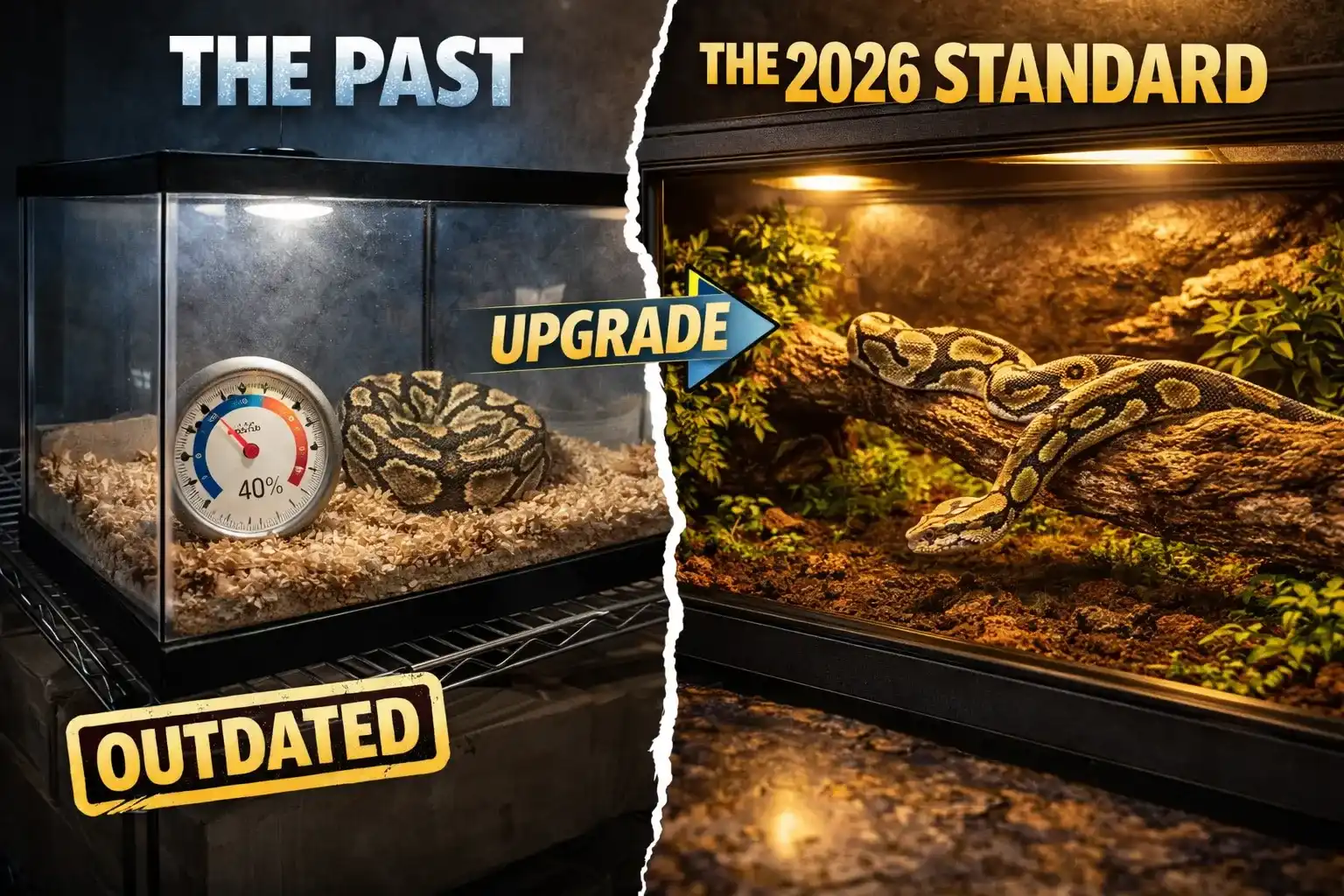
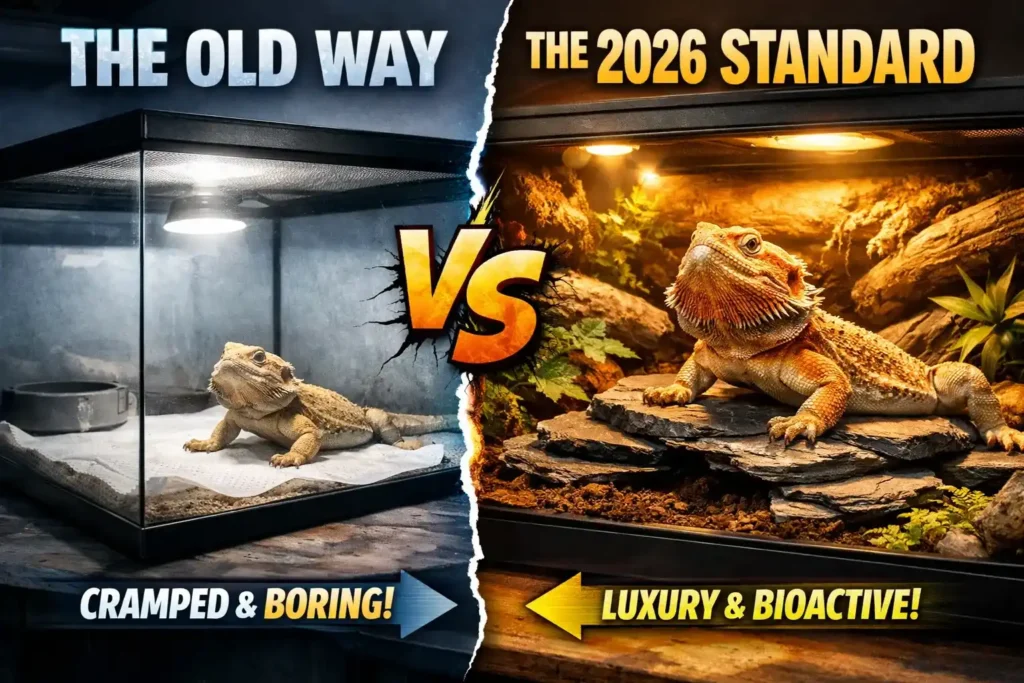
For decades, the hobby was dominated by heavy, fragile glass aquariums. But as we step into 2026, the reptile keeping community has largely shifted toward PVC (Polyvinyl Chloride). However, with so many options on the market, the Glass vs PVC reptile enclosure decision can be confusing for new hobbyists.
Is this just a trend, or is PVC scientifically superior? As experts with decades of experience in reptile care and enclosure manufacturing, we are here to settle the debate. In this comprehensive guide, we analyze the Glass vs PVC reptile enclosure pros and cons across durability, insulation, humidity control, and cost to help you make the right investment.
1. The Science of Insulation: Why “Homeostasis” Matters
Reptiles are ectothermic (cold-blooded). They rely entirely on their environment to regulate their body temperature. This process is called thermoregulation.
The Glass Problem: Thermal Conductivity
Glass is a highly conductive material. In simple terms, it transfers heat very easily.
-
Heat Loss: In a glass terrarium, the heat you pump in via expensive basking bulbs passes right through the glass walls and escapes into your room.
-
The Result: Your heater runs 24/7, your electricity bill spikes, and your reptile may still be cold.
The PVC Solution: Thermal Efficiency
In the Glass vs PVC reptile enclosure battle, PVC wins heavily on insulation.
-
Heat Retention: Toxirium PVC enclosures act like a cooler for heat. They trap the warmth inside the habitat.
-
Stable Gradients: This makes it much easier to maintain a “hot side” of 100°F+ and a “cool side” of 75°F without dangerous fluctuations.
-
Energy Savings: Because the enclosure holds heat, your thermostat will dim your heat source more often, saving you significant money on electricity over the enclosure’s lifespan.
2. Humidity Control: The “Chimney Effect”
Humidity is often the hardest parameter for new keepers to master, especially for tropical species like Ball Pythons or Chameleons.
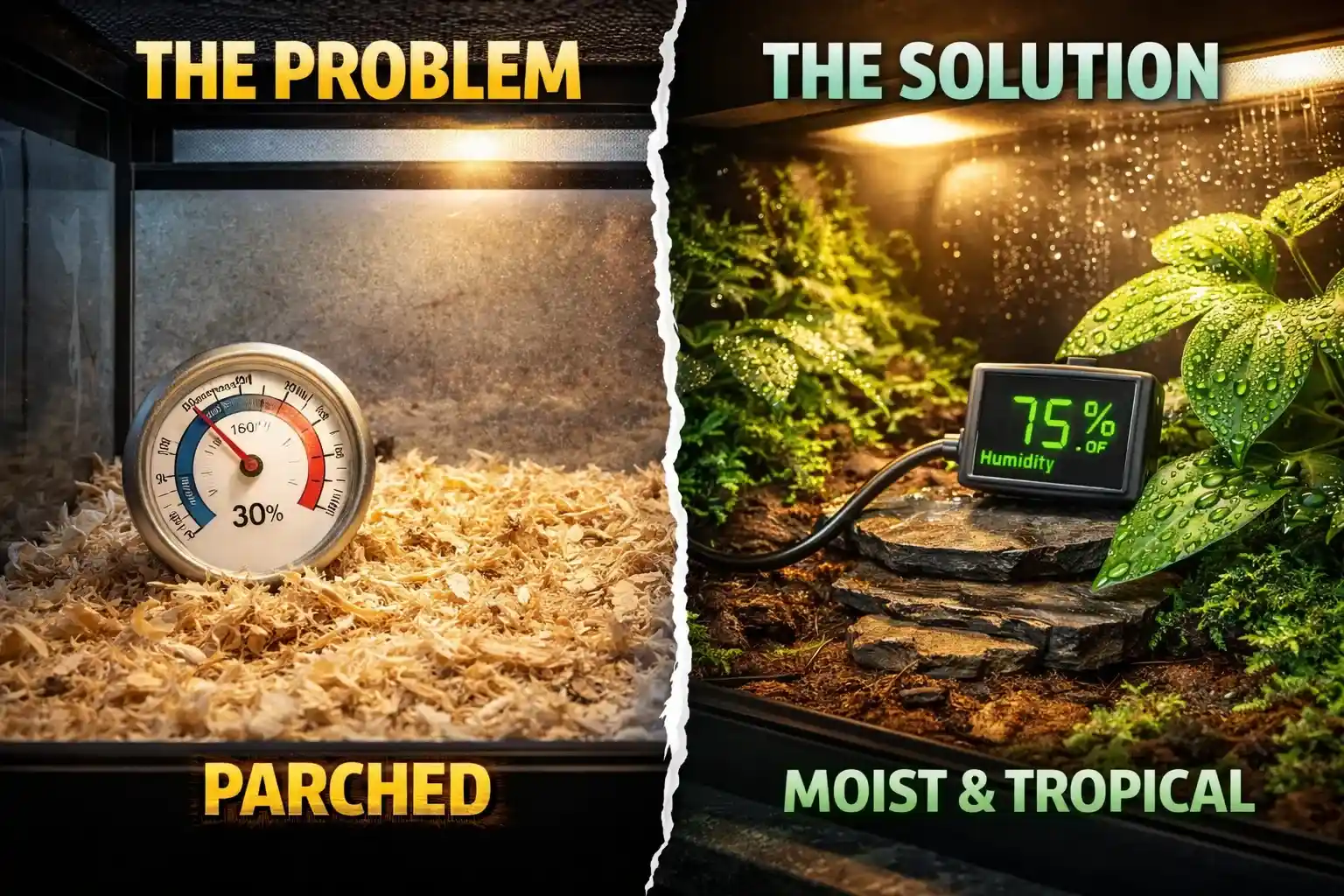
Glass Tanks: Most glass tanks utilize a screen mesh top. Heat rises, carrying moisture with it, and escapes instantly through the screen mesh (the Chimney Effect). Keepers often struggle with wet towels and foil tape to stop this.
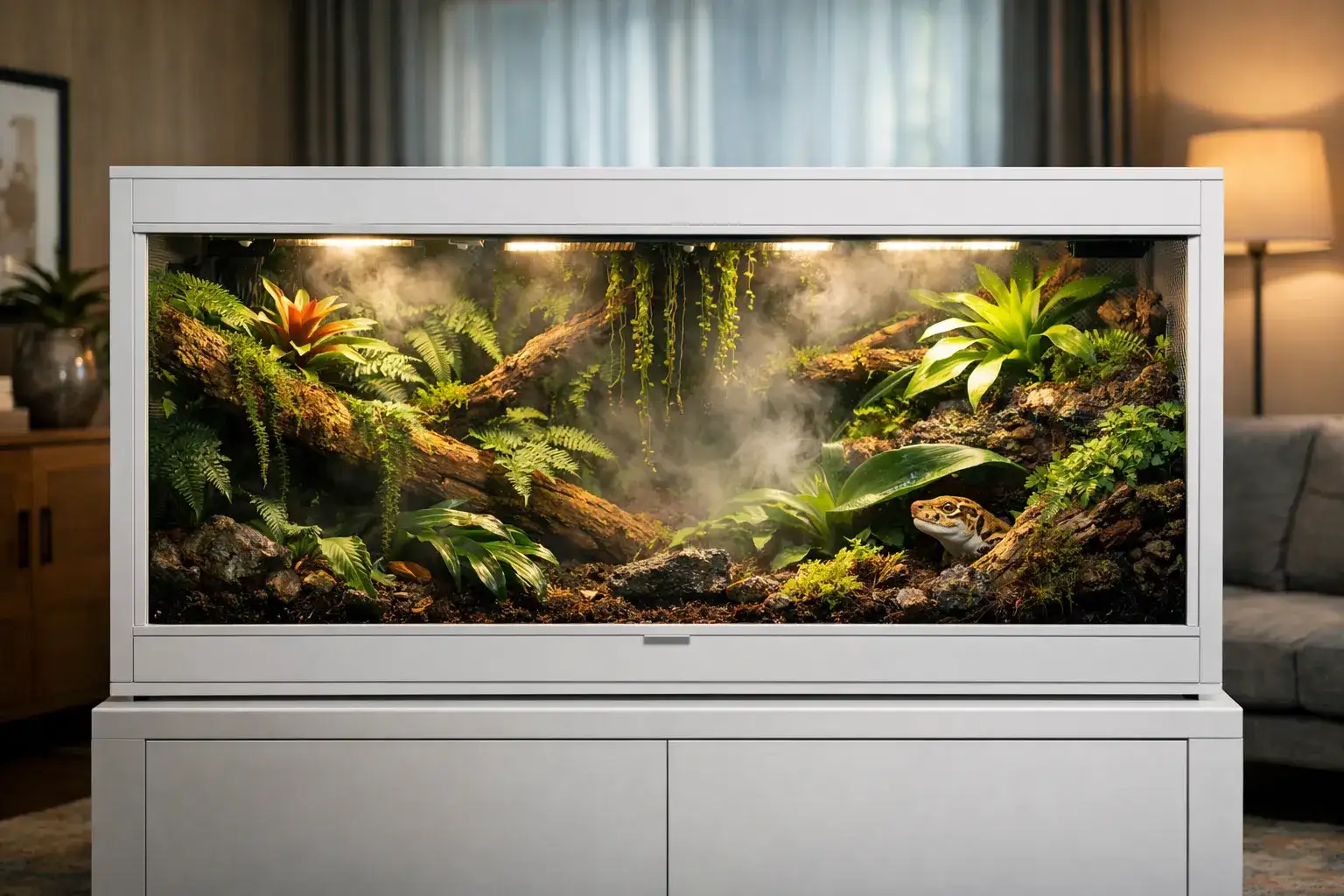
PVC Enclosures: Our 4’x2’x2′ PVC Reptile Enclosure is a closed system with solid tops and strategic ventilation slots. This design allows you to hold humidity levels of 60-80% effortlessly, preventing serious health issues like stuck shed (dysecdysis) and respiratory infections.
3. Durability, Weight, and “Stackability”
Have you ever tried to move a 120-gallon glass tank? It weighs over 100 lbs empty. It requires two people to lift, and if you drop it, it shatters.
When considering a Glass vs PVC reptile enclosure, consider the weight and flexibility:
-
Lightweight: A Toxirium 4x2x2 PVC cage weighs a fraction of a glass tank. One person can easily move it.
-
Shatterproof: PVC is a robust plastic. It won’t crack if you bump it.
-
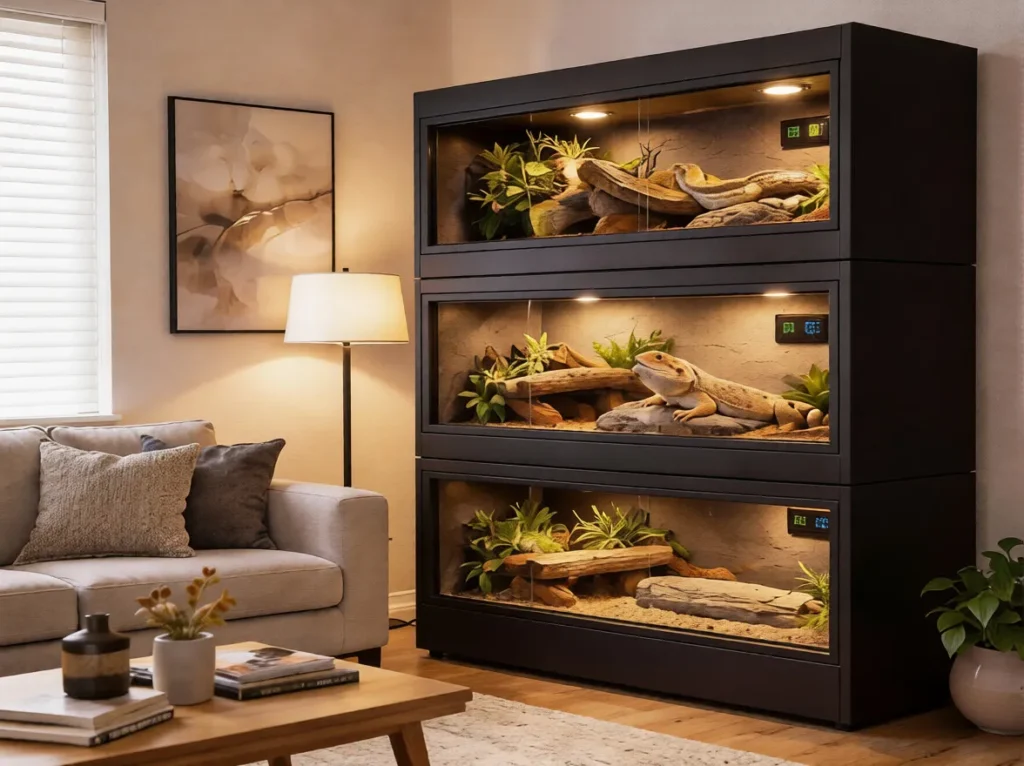
Stackable Design: This is a game-changer for 2026. Glass tanks cannot be stacked without expensive, heavy-duty shelving racks. Toxirium PVC Enclosures feature integrated support bars. You can stack them 3 or 4 high directly on top of each other. This saves massive amounts of floor space and creates a stunning display.
Pro Tip: Toxirium’s support bars are rated to hold up to 100 lbs, ensuring your stack is stable and safe.
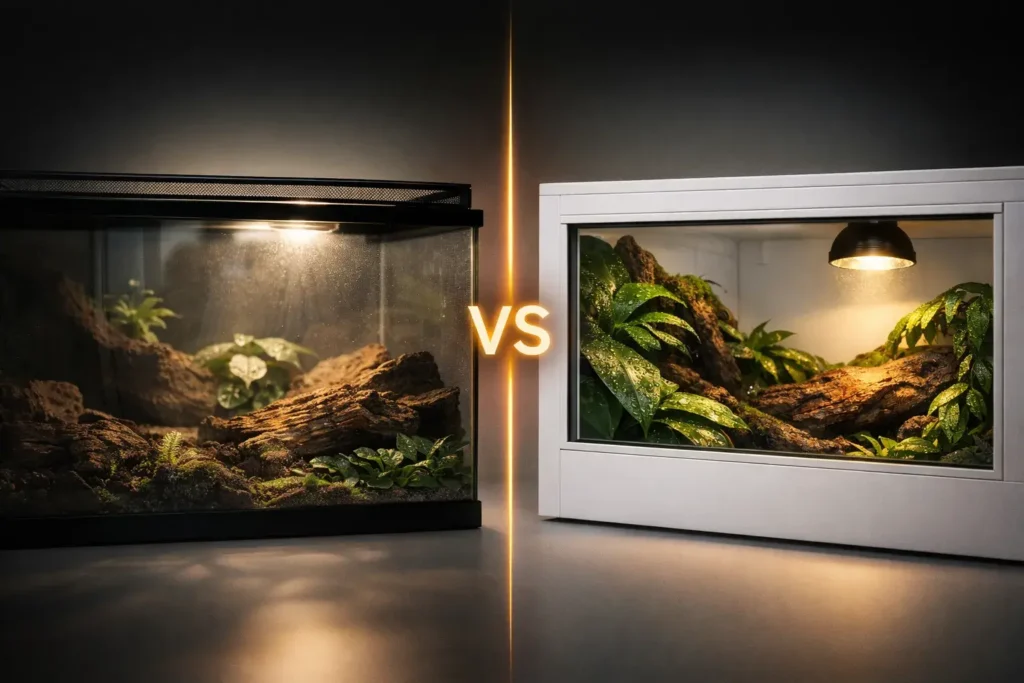
At a Glance: Glass vs. PVC Comparison Table
| Feature | Glass Terrarium | Toxirium PVC Enclosure | Winner |
| Insulation | Poor (High heat loss) | Excellent (High heat retention) | PVC |
| Humidity | Difficult to maintain | Easy to maintain | PVC |
| Weight | Very Heavy | Lightweight | PVC |
| Visibility | 360° (Can stress animals) | Front-facing (Low stress) | PVC |
| Durability | Fragile (Easy to break) | Tough & Flexible | PVC |
| Stackability | Requires Rack System | Built-in Stacking | PVC |
| Price | Cheaper Upfront | Better Long-term Value | PVC |
4. Aesthetics and “The Fear Factor”
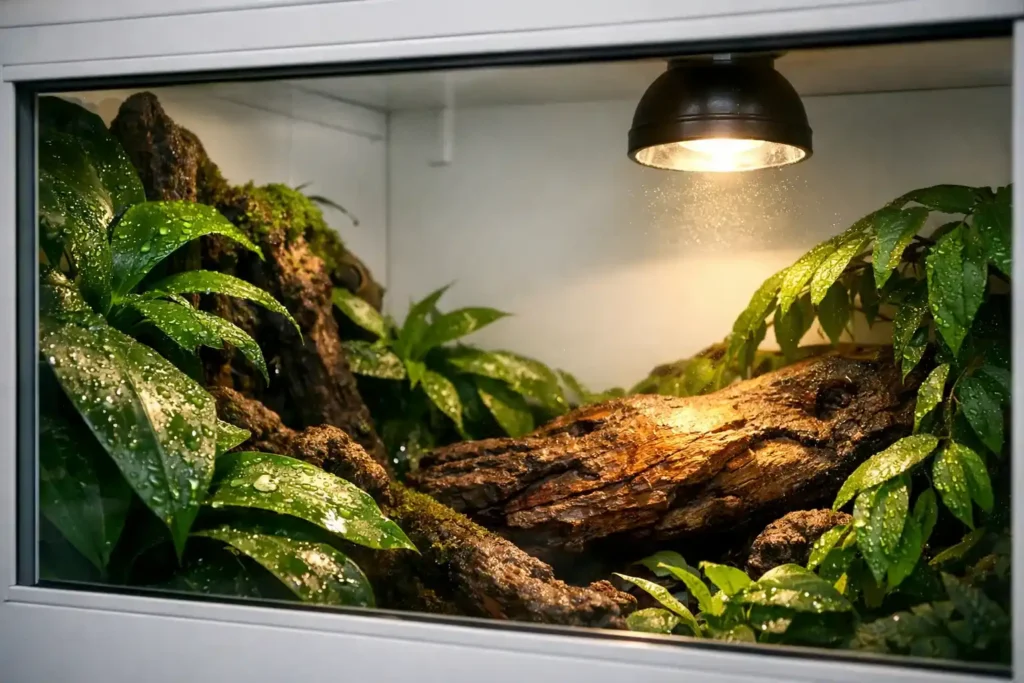
Many reptiles feel vulnerable when exposed on all sides. A glass tank that is transparent on all four sides can cause chronic stress, leading to “glass surfing” (rubbing their nose against the glass).
Toxirium PVC enclosures feature:
-
Opaque Sides and Back: This mimics a cave or burrow, making your reptile feel secure. A secure reptile is a happy reptile that eats better and handles better.
-
Tempered Glass Doors: Unlike cheap acrylic that scratches and fogs up over time, we use high-quality tempered glass for our sliding doors. You get the perfect clarity of glass where it matters (the front) with the security of PVC on the sides.
5. Which Species Need PVC the Most?
While almost all reptiles benefit from PVC, some absolutely require it for proper care in 2026.
The Bearded Dragon (Arid)
Bearded Dragons need a 4x2x2 enclosure (120 Gallons) minimum.
-
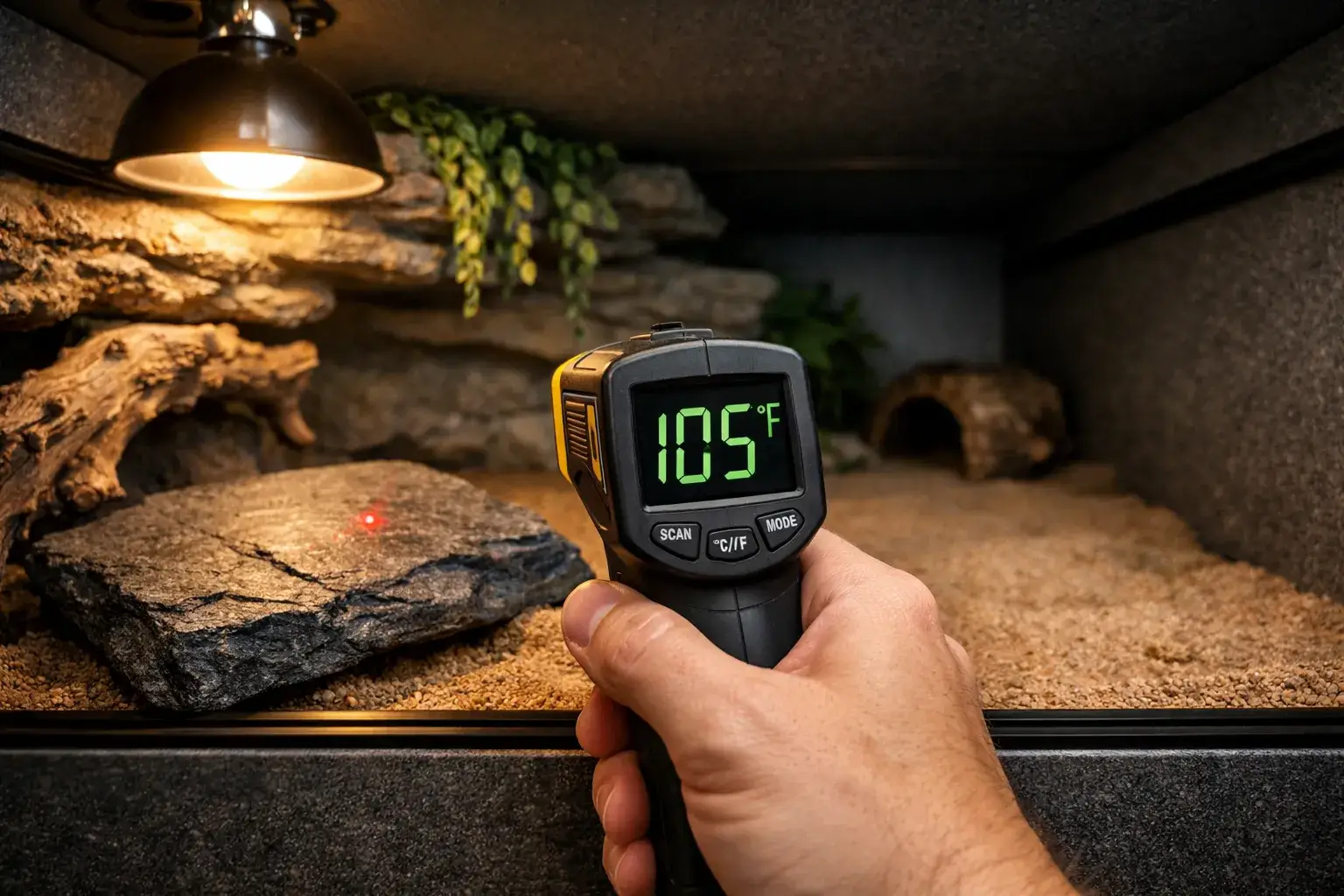
Why PVC? They require high basking temps (105°F+). PVC keeps that heat focused on the dragon, not your living room.
-
Recommendation: Black 4’x2’x2′ PVC Reptile Enclosure
The Ball Python (Tropical)
Ball Pythons are notorious for going on hunger strikes if humidity is low.
-
Why PVC? Maintaining 70% humidity in a glass tank is a nightmare. In a PVC cage, it happens naturally.
-
Recommendation: White 4’x2’x2′ PVC Reptile Enclosure
Monitors & Tegus (Large Scale)
These intelligent lizards need massive space. Glass tanks simply don’t come big enough.
-
Why PVC? Our enclosures are expandable. You can combine units to create 8-foot or longer habitats.
-
Recommendation: Expandable PVC Reptile Enclosure
6. Price vs. Value Breakdown
Cheap glass tanks might seem appealing initially, but the cost of accessories (insulation tape, strong shelving, extra heat lamps) adds up quickly.
When you weigh the pros and cons of a Glass vs PVC reptile enclosure, PVC offers significantly better long-term value. At Toxirium, we offer:
-
Free Shipping Always (Save hundreds on freight).
-
Expandable Designs that grow with your pet.
-
Sleek, Furniture-Grade Aesthetics that look great in your home.
Frequently Asked Questions (FAQ)
Q: Is PVC safe for use with heat lamps?
A: Yes. Toxirium uses high-grade, fire-retardant PVC. However, we always recommend using a thermostat with any heat source to prevent overheating.
Q: Does PVC scratch easily?
A: PVC is a softer material than glass, so minor scratches can occur on the inside floor over years. However, Toxirium uses a high-density material that is resistant to claws. Our doors are made of Tempered Glass, not plastic, ensuring your view remains crystal clear.
Q: Is assembly difficult?
A: Not at all. Shipping a glass tank is risky, so PVC enclosures ship flat-packed. Toxirium enclosures can be assembled in under 30 minutes with a simple screwdriver.
Final Verdict: Why Upgrade to Toxirium PVC?
So, who wins the Glass vs PVC reptile enclosure showdown in 2026?
If you are keeping fish or small amphibians, glass is still your friend. However, if you are keeping a Bearded Dragon, Ball Python, Blue Tongue Skink, or Monitor Lizard, PVC is the undisputed winner. It provides superior insulation, easier humidity control, and a stress-free environment for your pet.
Ready to upgrade?
Don’t settle for a drafty glass tank. Give your reptile the home they thrive in.
Don’t forget: Use code TR8OFF at checkout for an exclusive 8% discount.