By Toxirium Team | Updated: January 2026 | Estimated Reading Time: 15 Minutes
1、Excerpt:
Is your Ball Python suffering from stuck shed or dry air? Stop fighting the “Chimney Effect.” In this 2026 Science-Based Guide, we reveal exactly how to maintain humidity in a ball python enclosure effortlessly. From substrate physics to the “Pouring Technique,” learn how to stabilize humidity levels at a perfect 70-80% and end the battle against low humidity forever.
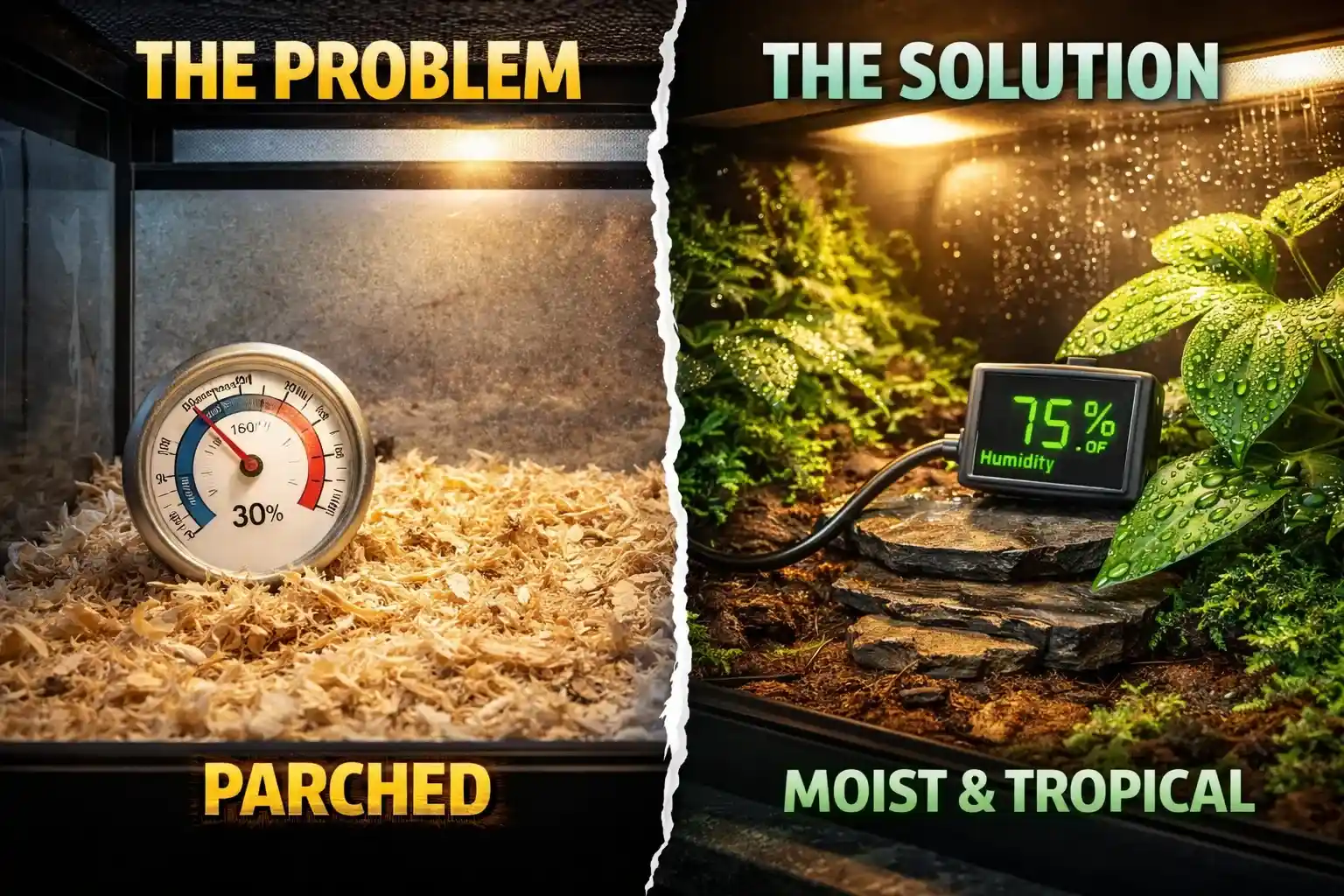
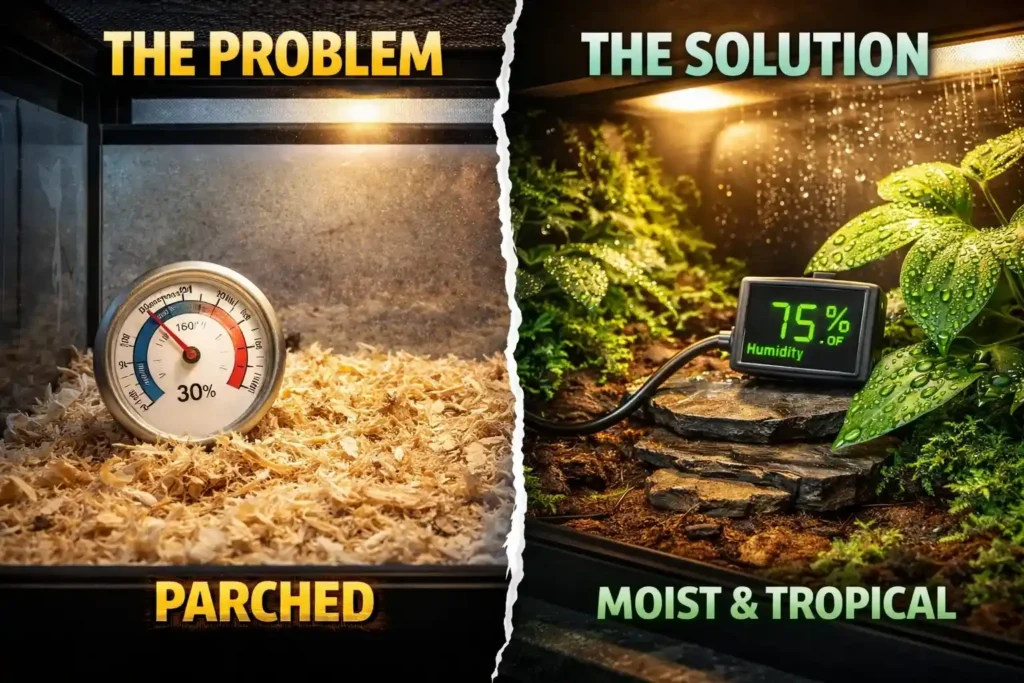
If you own a Ball Python (Python regius), you have likely faced the battle. You mist the tank, the hygrometer reads 70%, and an hour later, it’s back down to 40%. Your snake is hiding, its skin looks wrinkled, or worse—it’s stuck in a patchy, flaky shed.
Humidity is the single most misunderstood aspect of Ball Python husbandry. In the wild, these animals inhabit the termite mounds and burrows of West/Central Africa (Ghana, Togo, Benin), where the microclimate humidity rarely drops below 70-80%.
Yet, in captivity, we often force them into dry, screen-topped glass boxes.
This guide is not just a list of tips. It is a hardcore scientific breakdown of how airflow, thermodynamics, and substrate physics interact. We will teach you how to maintain humidity in a ball python enclosure consistently, ending the battle against dry air once and for all.
Part 1: The Biology of Hydration (Why 60% Is Not Enough)
Before we fix the numbers, we must understand the biology. Why do Ball Pythons need high humidity? They don’t just drink water; they interact with it atmospherically.
The Mechanism of Shedding (Ecdysis)
Snakes grow a new layer of skin underneath the old one. To separate these layers, their body produces a delicate fluid (lymph).
-
The Dry Air Problem: If the ambient humidity is too low (under 60%), this lymph fluid evaporates or becomes tacky before the separation is complete.
-
The Result: Dysecdysis (stuck shed). This isn’t just cosmetic. Retained shed on the eye caps can cause blindness; retained shed on the tail tip can cut off circulation (necrosis).
The Respiratory Risk
Ball Pythons have a primitive respiratory system. Their lungs are lined with moist mucous membranes.
-
Chronic Dehydration: Constantly breathing dry air (under 50%) dries out these membranes, creating microscopic cracks where bacteria flourish. This is the leading cause of Respiratory Infections (RI), which can be fatal and expensive to treat.
The 2026 Standard: Aim for a consistent 70% – 80% relative humidity.
Part 2: The Physics of Airflow (The “Glass Tank” Enemy)
If you are struggling with how to maintain humidity in a ball python enclosure, the culprit is almost certainly your enclosure type.
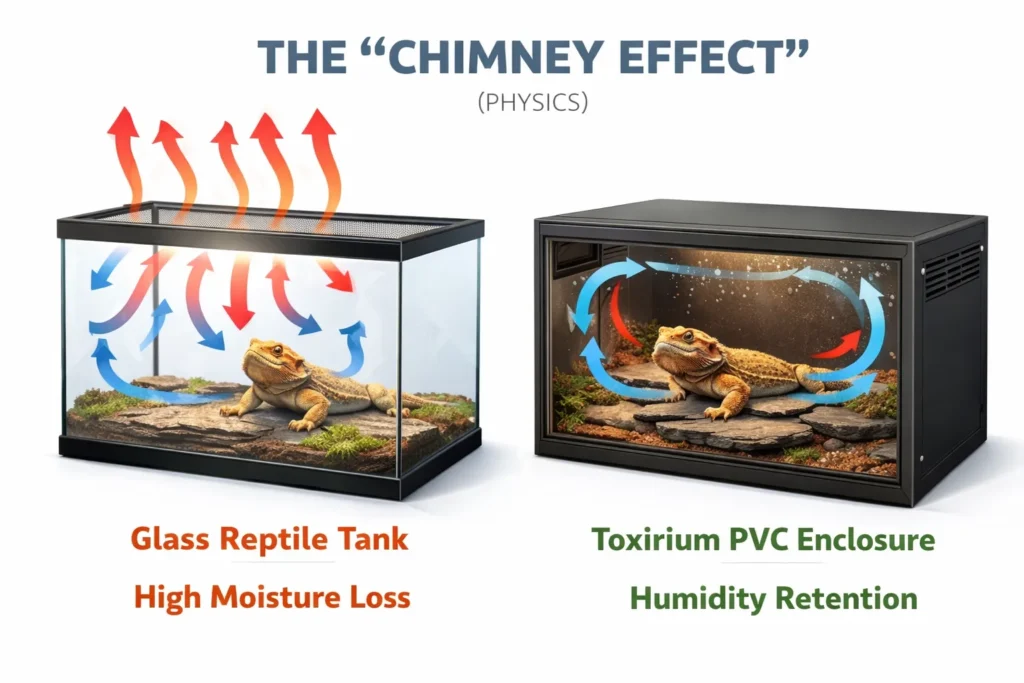
The “Chimney Effect” in Screen-Top Tanks
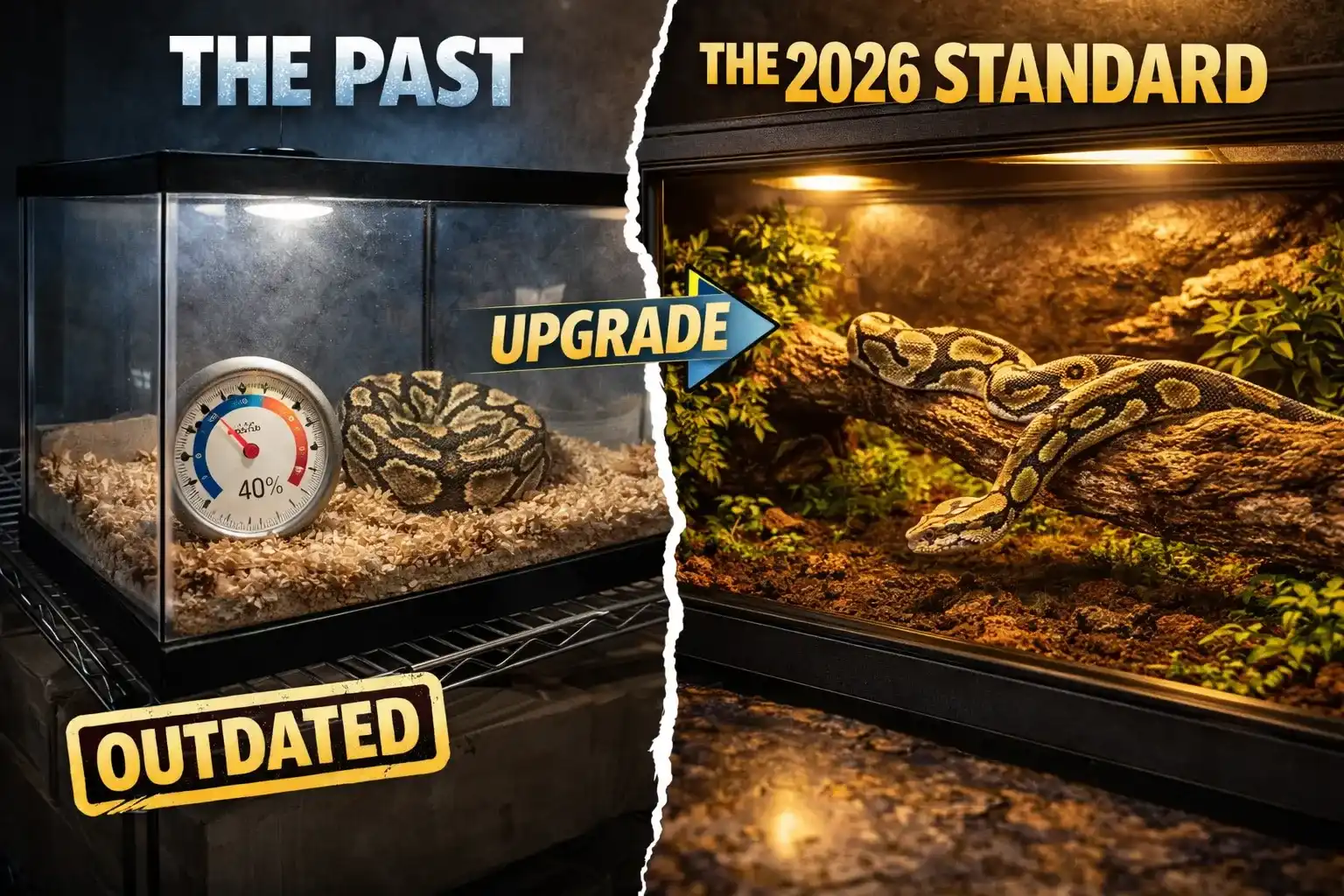
Most keepers start with a glass aquarium. From a physics standpoint, this is a humidity extraction machine.
-
Heat Rises: You place a heat lamp on top of the screen mesh.
-
Convection: The hot air rises and escapes through the screen instantly.
-
The Vacuum: As hot air leaves, it creates a vacuum that pulls cold, dry air from your room into the tank to replace it.
-
The Cycle: This constant airflow strips moisture from your substrate faster than you can replace it.
The PVC Advantage (Closed System)
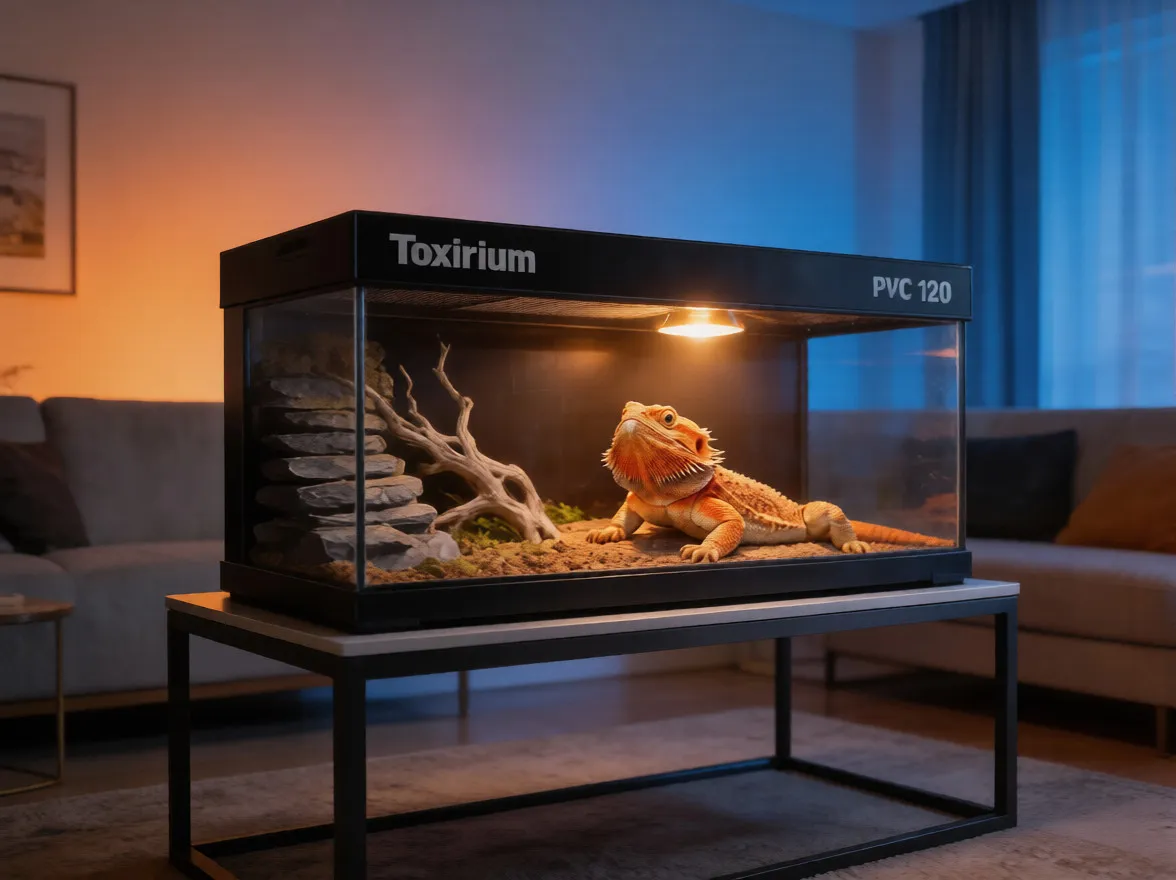
This is why professional breeders use PVC Enclosures.
-
Solid Top: A Toxirium PVC Enclosure has a solid PVC roof. Humidity hits the ceiling and condenses back down rather than escaping.
-
Controlled Ventilation: Our side vents allow for necessary oxygen exchange without creating a “wind tunnel” that dries out the air.
-
Result: Switching from glass to PVC often solves humidity issues overnight without any extra effort.
Part 3: Substrate Science (The “Sponge” Strategy)
If upgrading to PVC isn’t an option today, or if you want to optimize your setup, your choice of substrate is the biggest variable.
The “No-Go” List
Never use these for Ball Pythons:
-
Aspen Shavings: They mold when wet and hold zero humidity.
-
Sand: Causes impaction and creates an arid desert environment.
-
Paper Towels: Great for quarantine, terrible for humidity maintenance.
The Best Substrates for High Humidity
You need a substrate that acts like a sponge—holding water in its cellular structure without feeling “wet” to the touch (which causes scale rot).
-
Coconut Husk (Coco Chip): The gold standard. It resists mold and holds 10x its weight in water.
-
Cypress Mulch: Excellent moisture retention and antimicrobial properties.
-
Organic Topsoil Mix: The base for bioactive setups.
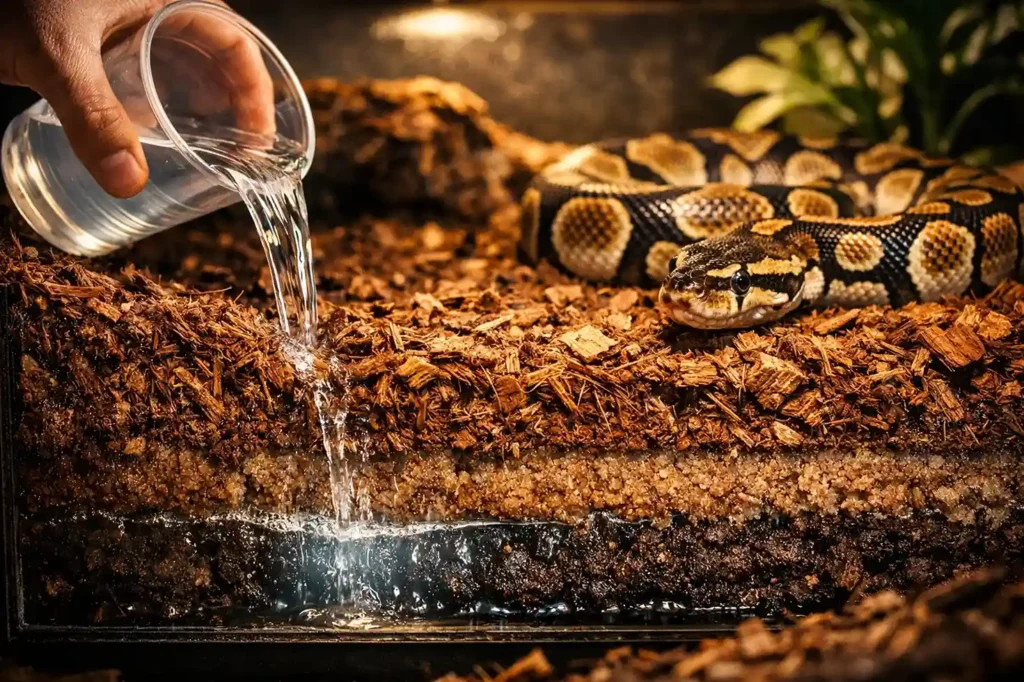
The “Pouring” Technique vs. Misting
Stop spraying your tank every 2 hours. It doesn’t work.
-
Why Misting Fails: It only wets the top layer. The heat lamp evaporates it in 30 minutes.
-
The Professional Method (Pouring):
-
Use a deep layer of substrate (3-4 inches).
-
Pour a cup of water directly into the corners of the enclosure.
-
The Physics: The water flows to the bottom layer, creating a moisture reservoir. The top layer stays dry (protecting the snake’s scales), but the water slowly evaporates from the bottom up, providing steady humidity for days.
-
Toxirium Feature: Our PVC enclosures feature a 4-inch Substrate Shield, specifically designed to hold this deep, moisture-rich substrate layer without leaking.
Part 4: Heating Dynamics and Humidity
There is a direct relationship between temperature and humidity: Relative Humidity (RH).
-
Scientific Fact: Hot air can hold more water vapor than cold air.
-
The Trap: If you heat up air without adding more water, the Relative Humidity percentage drops.
The CHE (Ceramic Heat Emitter) Problem
Ceramic Heat Emitters are notorious humidity killers because they produce intense, dry, convection heat.
-
The Fix: If you struggle with humidity, consider switching to a Deep Heat Projector (DHP) or a Radiant Heat Panel (RHP).
-
Radiant Heat Panels are ideal for Toxirium PVC cages. They mount to the ceiling and radiate heat downwards (like the sun) rather than blowing hot air around, which preserves humidity significantly better.
-
Part 5: Water Bowl Placement Physics
Strategic placement of your water dish can change the enclosure’s microclimate.
-
Cool Side Placement: Keeps water fresh/cool, minimal evaporation. (Good if your humidity is already perfect).
-
Warm Side Placement: By placing the water bowl near (but not directly under) the heat source, you encourage evaporation. The heat energy excites the water molecules, turning the bowl into a natural humidifier.
-
Surface Area: A wide, shallow bowl releases more moisture than a deep, narrow cup.
Part 6: Modifications for Glass Tanks (Stopgap Measures)
If you are stuck with a glass tank for now, here is how to maintain humidity in a ball python enclosure using DIY hacks.
1. The HVAC Tape Method
You need to stop the Chimney Effect.
-
Buy a roll of Aluminum HVAC Tape (Foil Tape).
-
Cover 80% to 90% of the screen mesh top. Leave only a gap for the heat lamp and a small area for airflow.
-
Warning: Do not use duct tape or scotch tape inside the tank. If it peels and sticks to the snake, it can tear their skin.
2. Insulation
Glass is thin. Wrap the back and sides of the tank with foam insulation boards. This keeps the heat in, meaning your lamp works less, which dries the air less.
Part 7: Measuring Correctly (Don’t Trust the Dial)
You cannot manage what you cannot measure.
-
Throw away the “Stick-on” Dials: The cheap analog gauges sold in pet stores are often off by 10-20%.
-
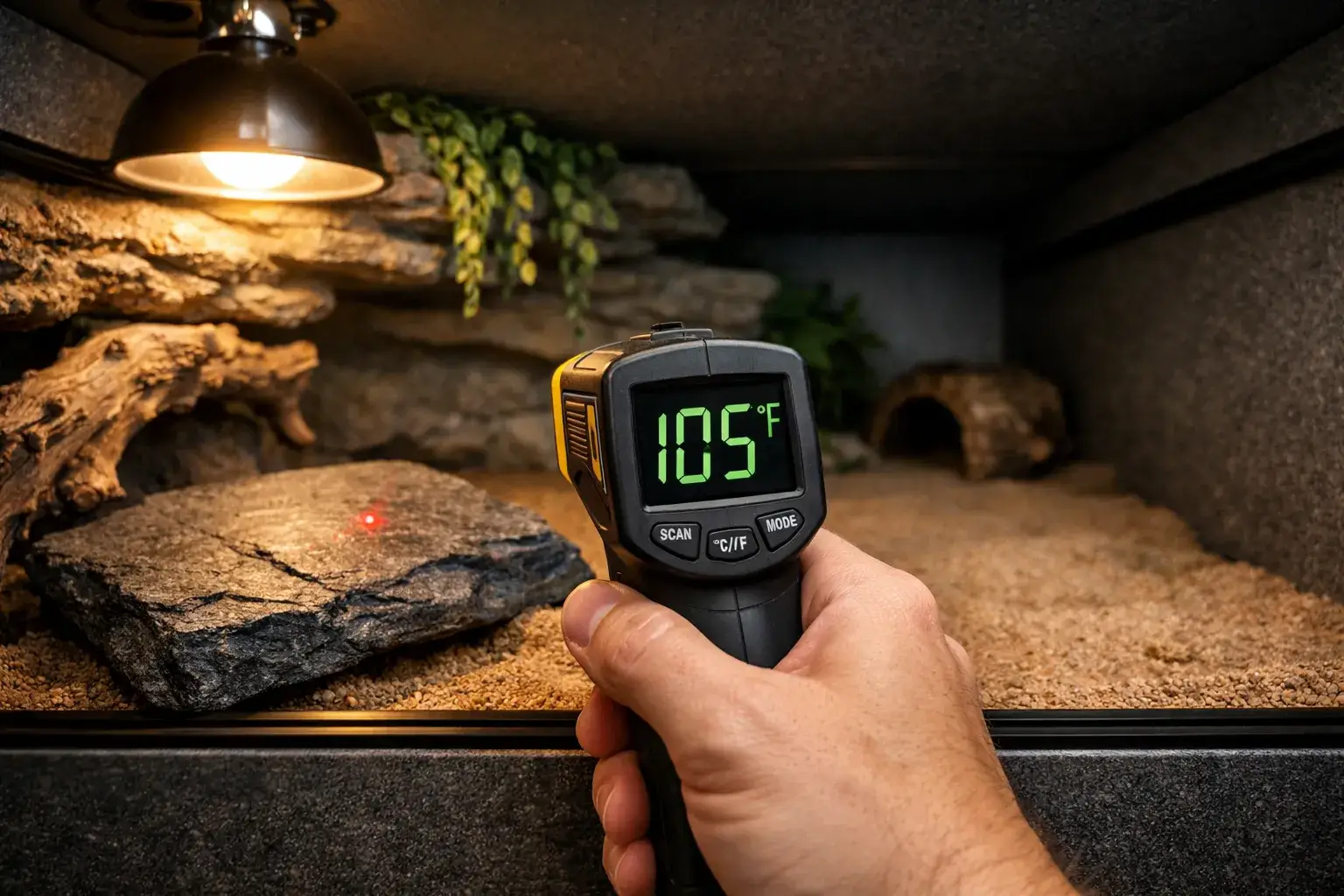
Use Digital Probes: You need a digital Hygrometer/Thermometer combo (like Govee or SwitchBot).
-
Placement: Place the probe on the Cool Side, near the substrate level. This is your baseline. The hot side will naturally be drier (percentage-wise) because of the physics explained in Part 4. If the cool side is 70-80%, you are winning.
Part 8: The Bioactive Solution (The Ultimate Fix)
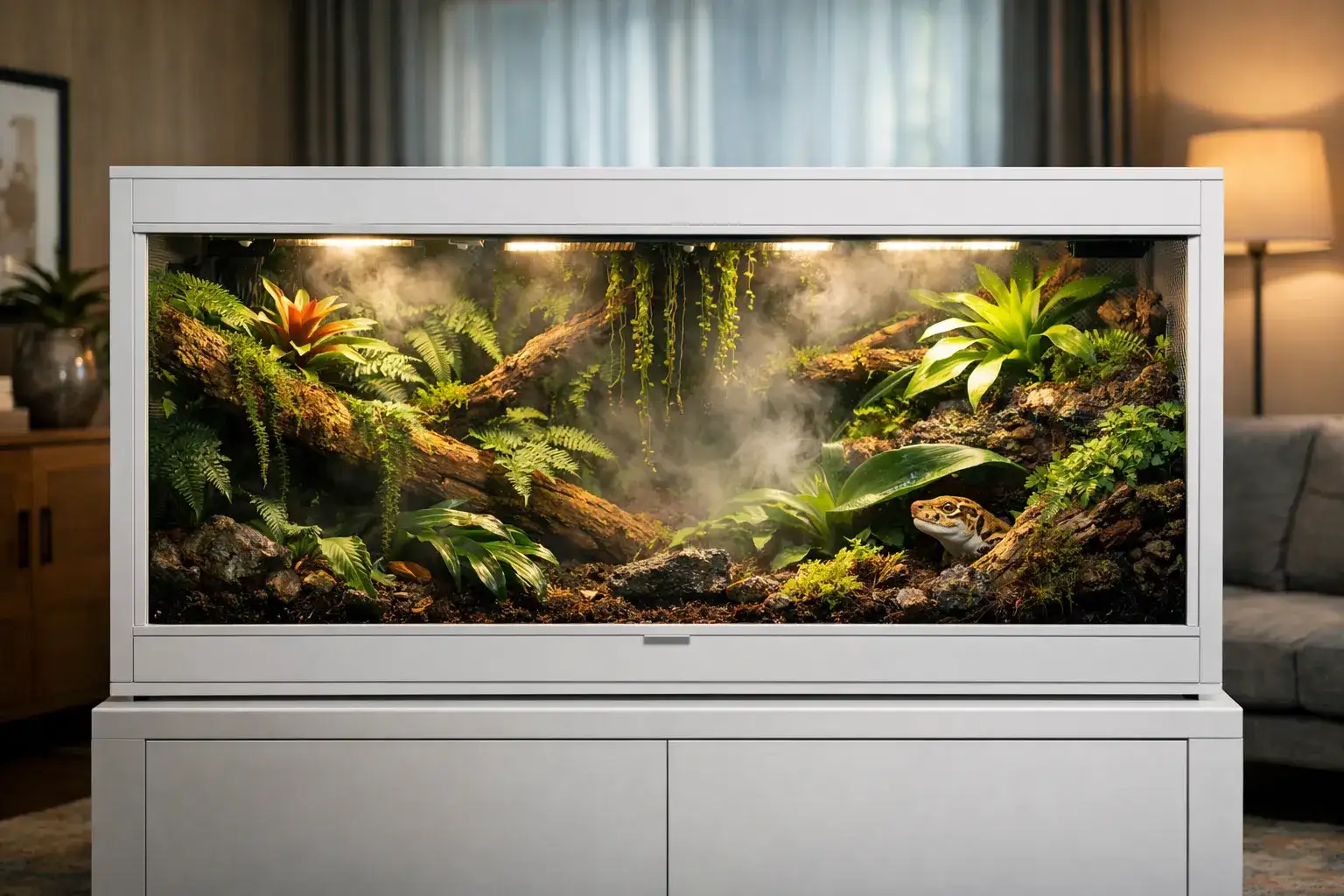
In 2026, the best way to solve humidity is to stop fighting nature and start simulating it.
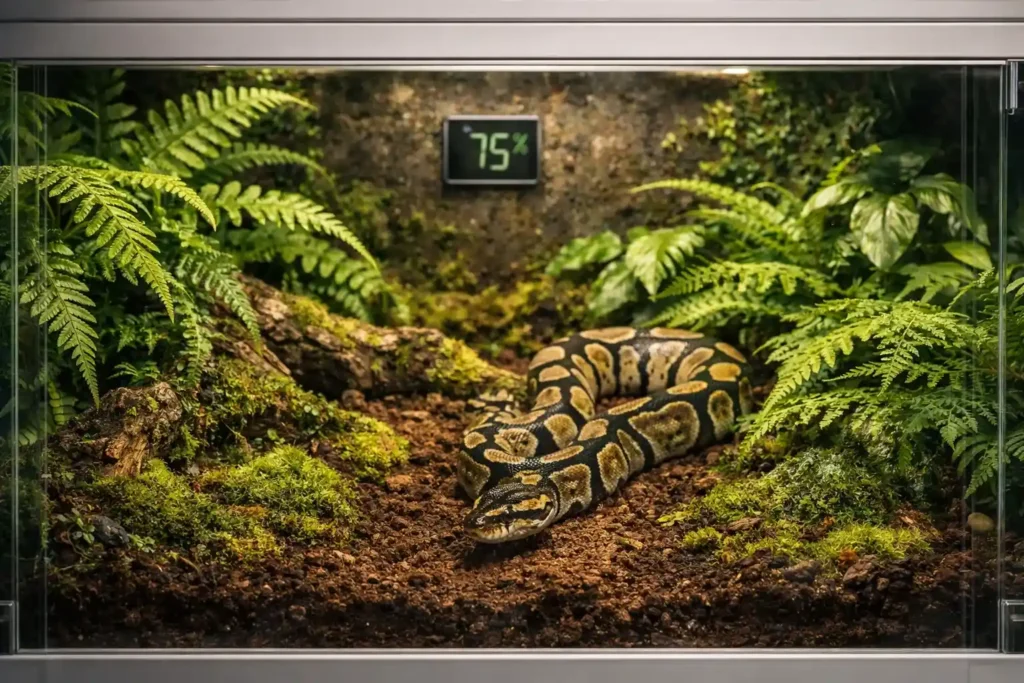
A Bioactive Setup involves living soil, live plants, and a cleanup crew (Isopods).
-
The Ecosystem: The live plants transpire (release water vapor). The soil holds deep moisture.
-
The Result: A bioactive tank naturally stabilizes at 70-80% humidity with almost zero maintenance from you.
-
Requirement: You need a waterproof enclosure. Glass tanks often leak heavy soil water. Toxirium PVC Enclosures are rot-proof and waterproof, making them the perfect vessel for a bioactive slice of the rainforest.
Part 9: Troubleshooting – Can It Be Too Humid?
Yes, but it is rare in a screen top setup.
-
Scale Rot: If the substrate is sopping wet on top, the snake sits on wet bedding. Bacteria enter the scales on the belly, causing brown, rotting patches.
-
The Balance: High Humidity (Air) ≠ Wet Surface (Ground).
-
The Test: Squeeze a handful of substrate. It should clump together but not drip water. If it drips, it’s too wet.
Frequently Asked Questions (FAQ)
Q: What is the ideal humidity for a Ball Python?
A: The old standard was 50-60%, but modern herpetoculture recommends 70-80%. In their native range (West Africa), humidity often spikes to 90% in the burrows where they spend the day. Consistent humidity below 60% will lead to dehydration and shedding issues.
Q: Can I use a fogger or humidifier?
A: You can, but be careful. Automatic foggers often wet the substrate surface too much, leading to Scale Rot. They are also hard to clean and can harbor bacteria. A PVC enclosure with deep substrate usually maintains humidity without needing a machine.
Q: Why does my tank fog up?
A: Fog on the glass means the temperature difference between inside and outside is high, and humidity is condensing. While it looks unsightly, it means your humidity is high! To reduce it, increase airflow slightly using the side vents on your Toxirium Enclosure, but ensure the % doesn’t drop too low.
Q: My humidity is stuck at 40%. Help!
A: If you have a glass tank with a screen top, cover 90% of the screen with HVAC foil tape immediately. Then, switch your substrate to Coconut Husk or Cypress Mulch and make it at least 3 inches deep. Pour water into the corners. If this fails, it is time to upgrade to a PVC enclosure.
Conclusion: The Permanent Solution
Fighting humidity in a glass tank is a losing battle against physics. You are constantly pouring water into a bucket with a hole in the bottom.
If you are tired of daily misting, stuck sheds, and worrying about Respiratory Infections, the solution is structural.
How to maintain humidity in a ball python enclosure effortlessly?
Upgrade to a closed-system PVC habitat.
By combining a Toxirium PVC Enclosure with a deep layer of coconut husk substrate, you create a stable, tropical microclimate that mimics the humid burrows of Ghana. Your Ball Python will thrive, eat better, and shed perfectly every time.
Ready to end the humidity battle?
Upgrade your habitat today.
Shop the Ball Python Recommended 4x2x2 PVC Enclosure
Use code TR8OFF for 8% OFF your order.