By Toxirium Team | Updated: January 2026 | Estimated Reading Time: 20 Minutes
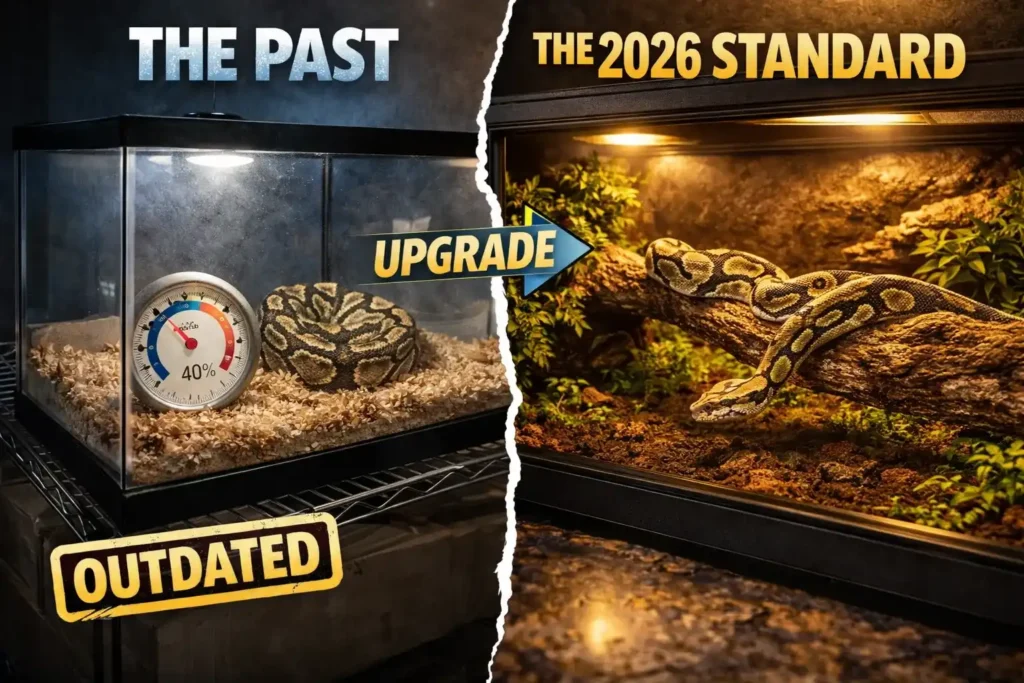
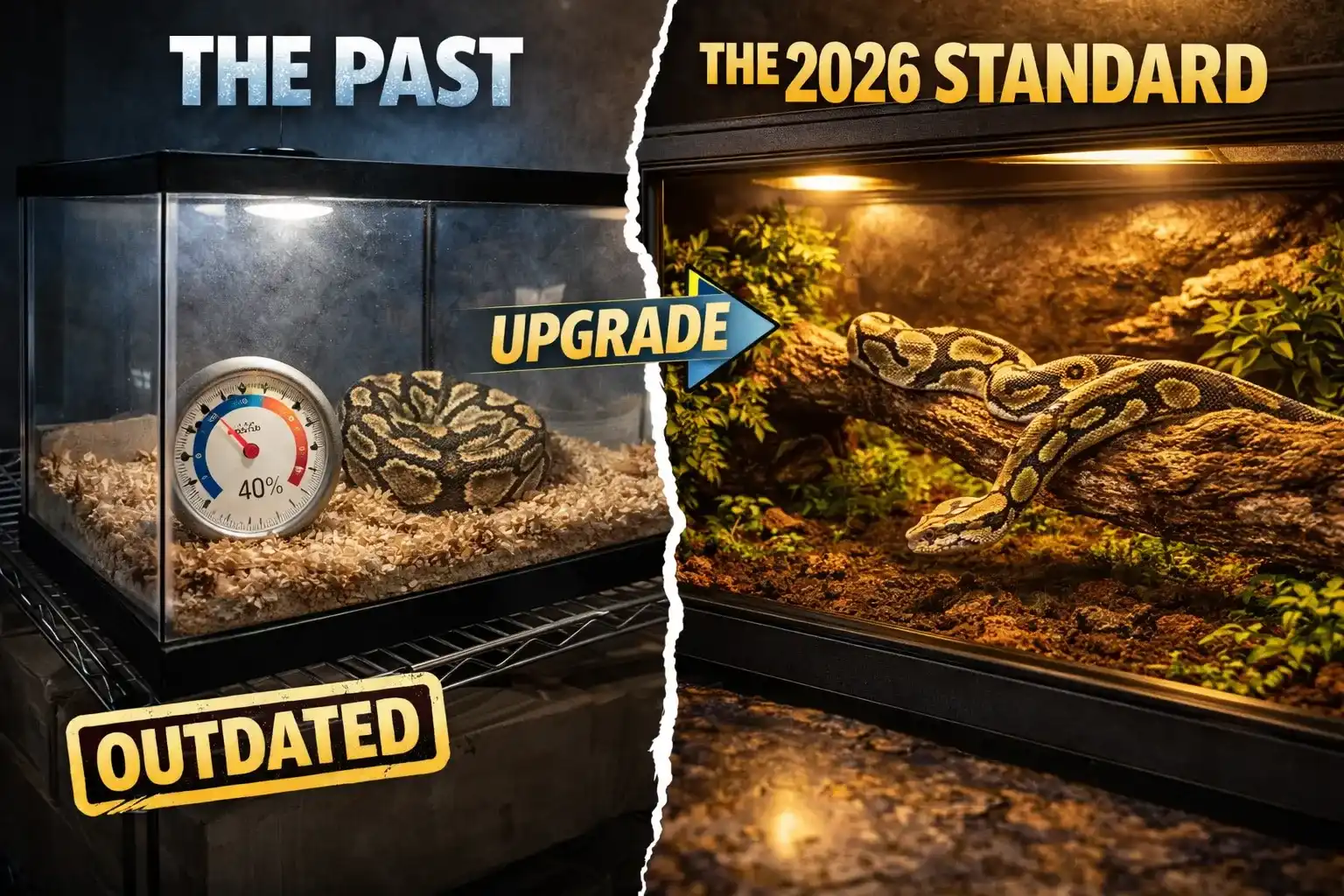
You walked into a pet store, saw a charming baby Bearded Dragon no bigger than your finger, and were sold a “Complete Starter Kit”—likely a 40-gallon glass aquarium. It seemed huge at the time.
Fast forward 12 months. That tiny lizard is now a 20-inch long, 500-gram “pancake” with claws. They are scratching frantically at the glass walls (“glass surfing”), their nose is rubbed raw, and they seem lethargic.
You have fallen victim to the “40-Gallon Myth.”
In 2026, the reptile husbandry community has undergone a massive shift. We have moved away from “surviving” to “thriving.” Veterinary experts and herpetologists now universally agree that the old standards are insufficient.
If you want your pet to live its full 12-15 year lifespan, you need to upgrade. In this comprehensive guide, we will break down the science of why a 120 gallon reptile tank (measuring 4’x2’x2′) made of PVC is the single best investment you can make for your dragon’s health.
The Definition: What is the Standard?
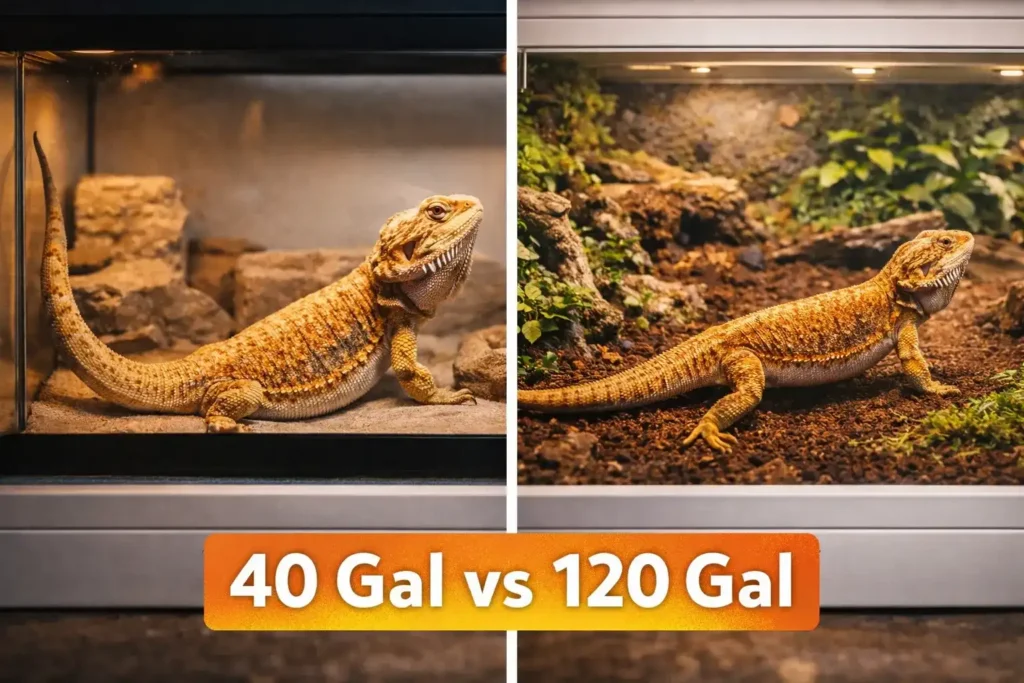
According to modern herpetological standards set by the Federation of British Herpetologists (FBH) and leading US experts, the absolute minimum enclosure size for an adult Bearded Dragon is 4’x2’x2′ (120 gallons). This footprint is essential to establish a proper temperature gradient (105°F to 75°F), allow for natural turning behaviors, and prevent stress-related illness. PVC is the superior material choice over glass due to its high thermal insulation, lightweight durability, and ability to hold humidity for shedding.
1: The Science of Space – Why Size Matters
Many keepers ask, “Why does a lazy lizard need so much space?” The answer lies in physics and biology, not just “room to run.”
1. The Thermoregulation Requirement (Physics)
Bearded Dragons (Pogona vitticeps) are ectothermic. They cannot generate their own body heat. To function, they must physically move between different temperature zones to regulate their metabolism.
-
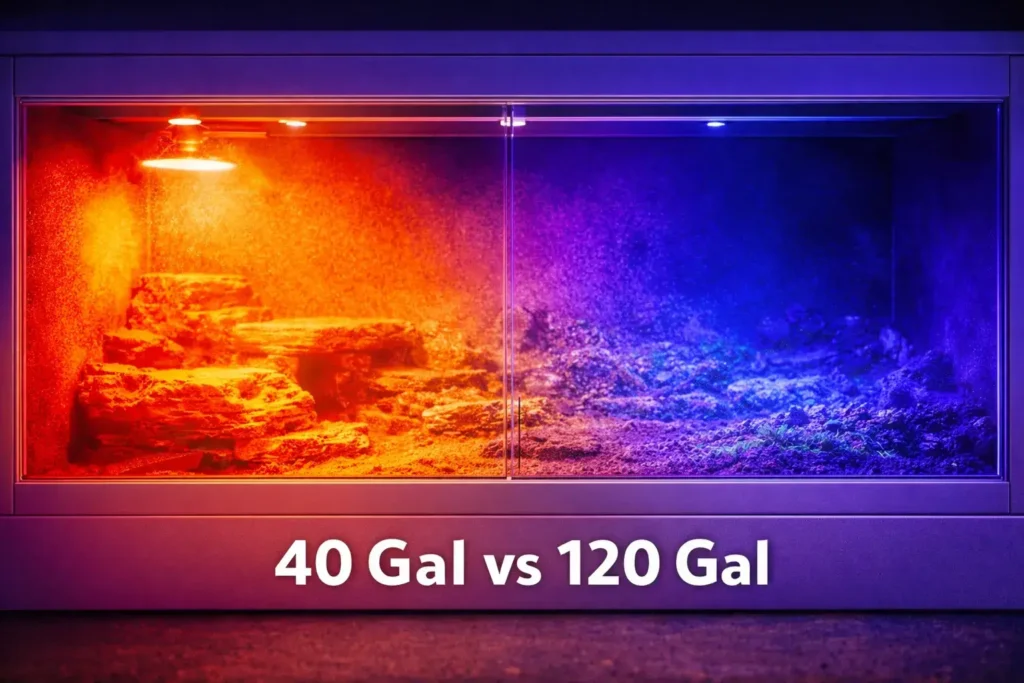
The “Goldilocks” Zone: They need a scorching Basking Spot of 105°F – 110°F to digest food. They also need a Cool Side of 75°F – 80°F to lower their heart rate and preserve brain function.
-
The 40-Gallon Failure: In a tank that is only 36 inches long (like a 40-gallon breeder), the heat lamp warms the entire volume of air. The “cool side” often stays at 90°F+.
-
The Consequence: The dragon cannot cool down. This leads to chronic dehydration, kidney stress, and heat stroke.
-
The 120 Gallon Solution: A 4x2x2 bearded dragon enclosure provides 4 feet of linear distance. This is enough physical space for the heat to dissipate, allowing for a true, safe thermal gradient.
2. The Turning Radius and Bone Health (Anatomy)
An adult dragon can reach 24 inches in length from snout to tail tip.
-
The 18-Inch Problem: Standard glass tanks are only 18 inches wide (front to back). An adult dragon literally cannot turn around without bending its spine or tail against the glass. Over years, this causes spinal deviations and stress.
-
The 2-Foot Advantage: A Toxirium 120 Gallon Enclosure is 24 inches deep. This allows the animal to fully rotate, stretch, and lay flat without hitting a wall.
3. Mental Health & “Glass Surfing” (Behavior)
If your dragon is constantly scratching at the walls, standing on its hind legs, or running back and forth, it is not “playing” or “saying hello.” It is a frantic stress response known as Glass Surfing.
-
Causes: Feeling trapped in a small space and seeing their own reflection (which they interpret as a rival dragon).
-
The Fix: A 120 gallon reptile tank made of opaque PVC eliminates the reflection issue on three sides and provides enough enrichment space to cure boredom-induced stress.
2: Glass vs. Screen vs. PVC – The Material War
Once you accept the size requirement, you must choose the material. In 2026, the debate of PVC vs glass terrarium is settled. Glass is obsolete for desert species.
1. Why Glass Tanks Fail
Glass is a “Thermal Sieve.” It has a very high thermal conductivity, meaning it transfers heat easily.
-
Energy Waste: Heat passes right through the glass walls into your living room. Your heater runs 24/7, trying to combat the heat loss.
-
Weight: A 120-gallon glass aquarium weighs over 150 lbs empty. Moving it requires two strong people and risks shattering.
-
** fragility:** One accidental bump with a rock during cleaning can shatter the entire habitat.
2. Why Screen Cages Are Tricky
Screen cages (mesh) are great for Chameleons, but terrible for Bearded Dragons.
-
Heat Loss: Heat rises and escapes instantly. Maintaining a 105°F basking spot in a screen cage in a cool room (68°F) is nearly impossible without massive wattage.
3. The Toxirium PVC Advantage (The New Standard)
PVC (Polyvinyl Chloride) is a high-density, closed-cell plastic.
-
Insulation (The “Cooler” Effect): PVC holds heat like a high-end cooler. It traps the infrared energy inside the enclosure. This means you can use lower wattage bulbs, saving significantly on your electricity bill over the lifespan of the pet.
-
Lightweight Durability: A Toxirium 4x2x2 PVC enclosure weighs about 30-40 lbs. One person can lift it. It is rigid, tough, and will not crack under normal impact.
-
Opacity: The solid white or black sides make the animal feel secure (like being in a cave or burrow), drastically reducing cortisol (stress hormone) levels.
3: Introducing the Toxirium 4x2x2 Habitat
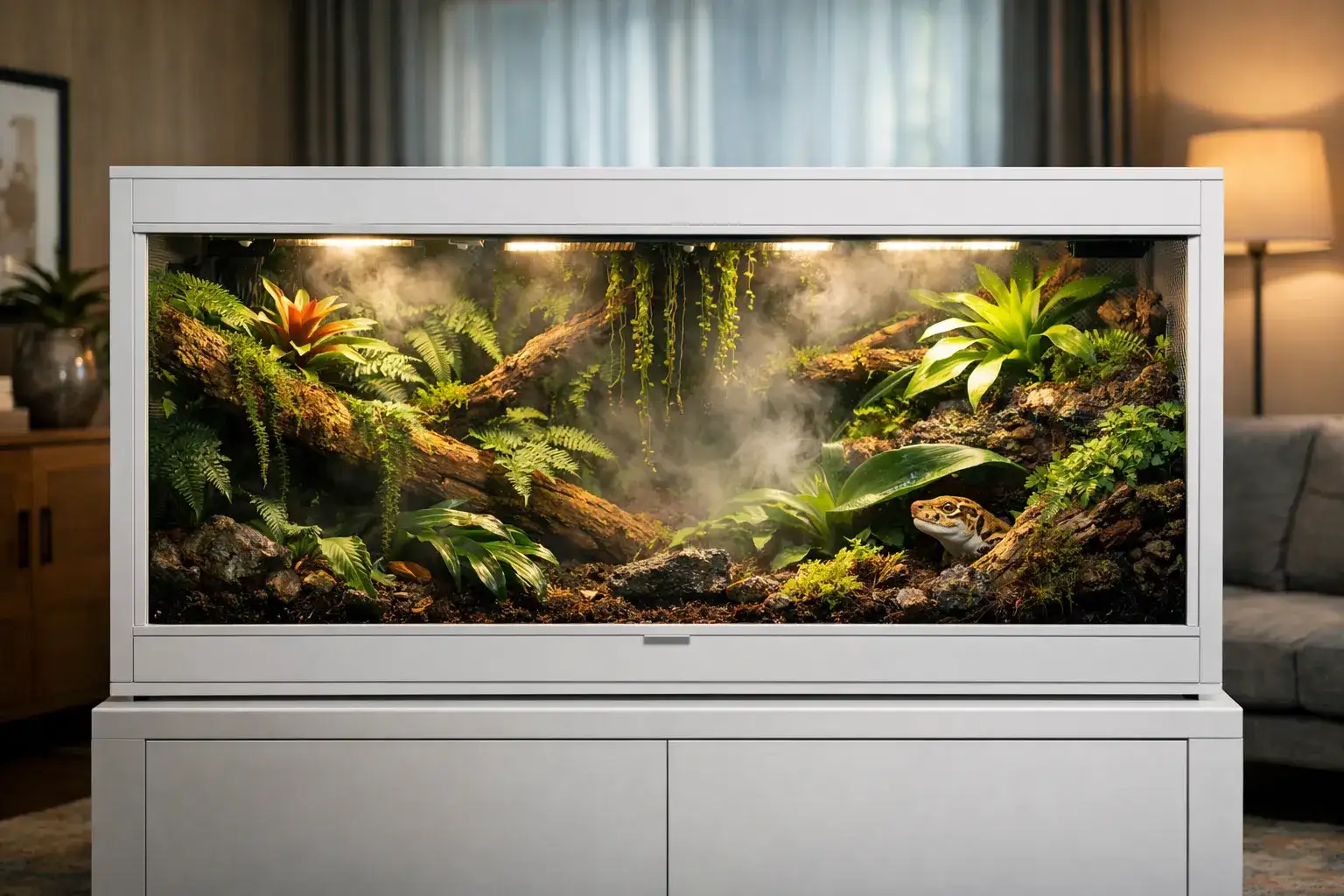
We didn’t just build a box; we engineered a home. The Toxirium 4’x2’x2′ PVC Reptile Enclosure addresses every pain point of traditional terrariums.
Feature Spotlight:
-
1/2 Inch High-Density PVC: We use furniture-grade PVC that is fire-retardant and holds screws securely. It won’t bow or warp under heat.
-
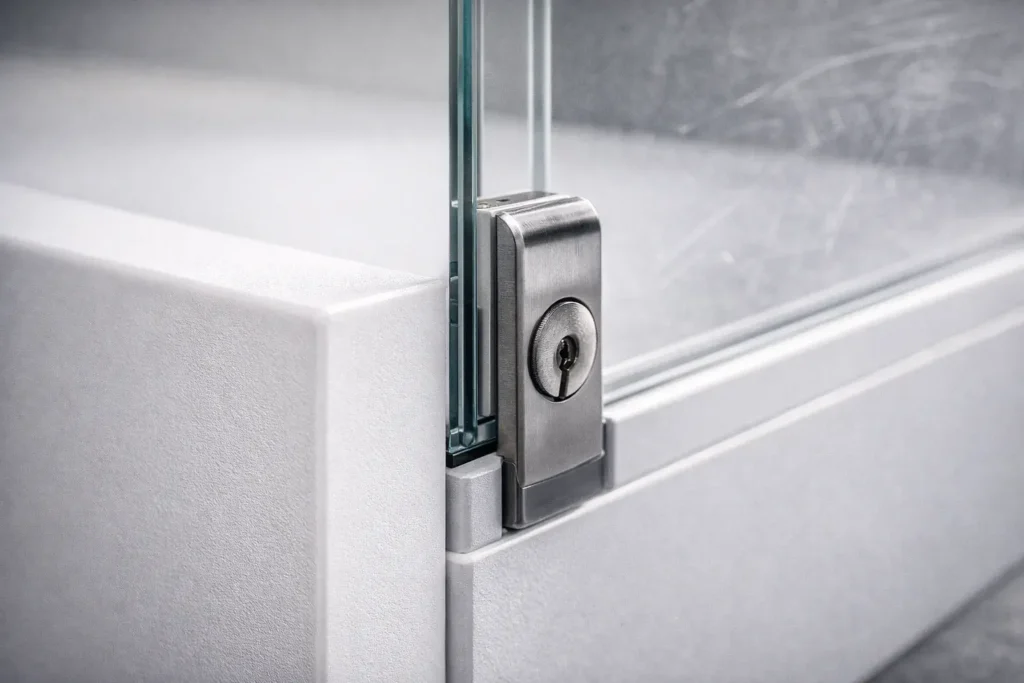
Tempered Glass Doors: Unlike competitors who use cheap acrylic (which scratches and fogs up within months), we use Tempered Glass. It stays crystal clear, is resistant to lizard claws, and is much safer than standard float glass.
-
The “Substrate Shield”: A 4-inch solid lip at the bottom allows you to add deep substrate for bioactive setups without it spilling onto your floor when you open the doors.
-
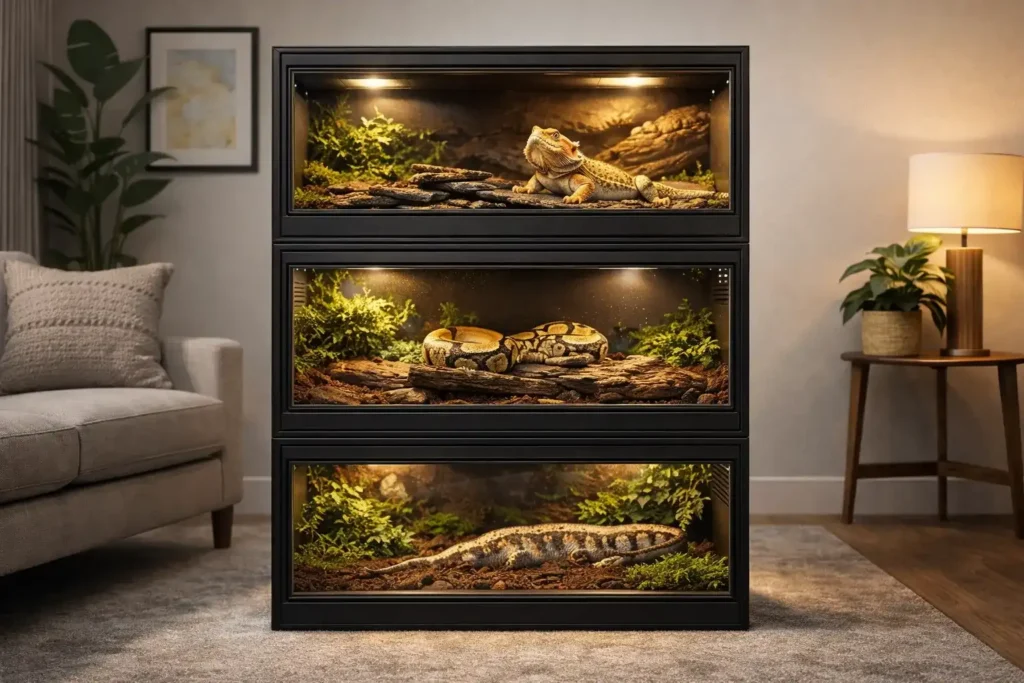
Stackable Design: This is crucial for multi-pet households. Our integrated support bars allow you to stack multiple 120-gallon units vertically using our Spacer Kits, turning a footprint of 8 sq ft into 24 sq ft of living space.
Visual Appeal: A sleek, matte black or white Toxirium enclosure looks like a piece of high-end modern furniture, not a science experiment.
Shop the 120 Gallon Kit – Ships Free from NJ
4: How to Set Up Your 120 Gallon Enclosure (Hardcore Guide)
Buying the best bearded dragon cage size is step one. Setting it up correctly is step two. Here is how to utilize the 4x2x2 space.
01. Lighting Placement (The “Ferguson Zone”)
In a glass tank with a screen top, the mesh blocks 30% to 50% of the UVB rays. This puts your dragon at risk of metabolic bone disease.
-
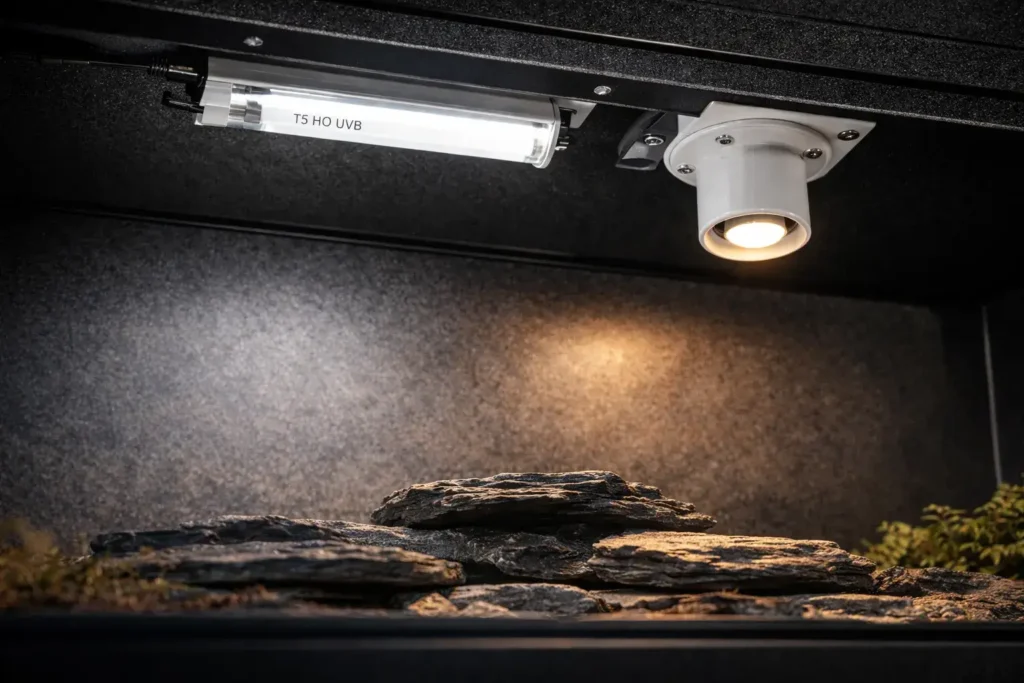
The PVC Advantage: In a Toxirium PVC cage, you mount the T5 HO UVB fixture inside the cage, screwing it directly into the ceiling.
-
The Setup: Mount a 24″ or 36″ T5 UVB tube (Arcadia 12% or Reptisun 10.0) on the ceiling, overlapping with your heat lamp on the “Hot Side.” This ensures the dragon gets UV and Heat simultaneously, just like the sun.
02. Creating a Bioactive Floor
Because Toxirium PVC is waterproof and rot-proof, you can go Bioactive.
-
The Mix: Use 4 inches of organic topsoil and play sand (50/50 mix).
-
The Clean Up Crew: Add Isopods (Dairy Cows or Powder Oranges) and Springtails. They will eat the dragon’s waste, making the setup virtually self-cleaning.
-
Decor: Use the 2-foot height! Add large Ghost Wood branches and cork bark flats to create climbing opportunities.
03. Monitoring the Microclimate
Stop using “stick-on” analog thermometers.
-
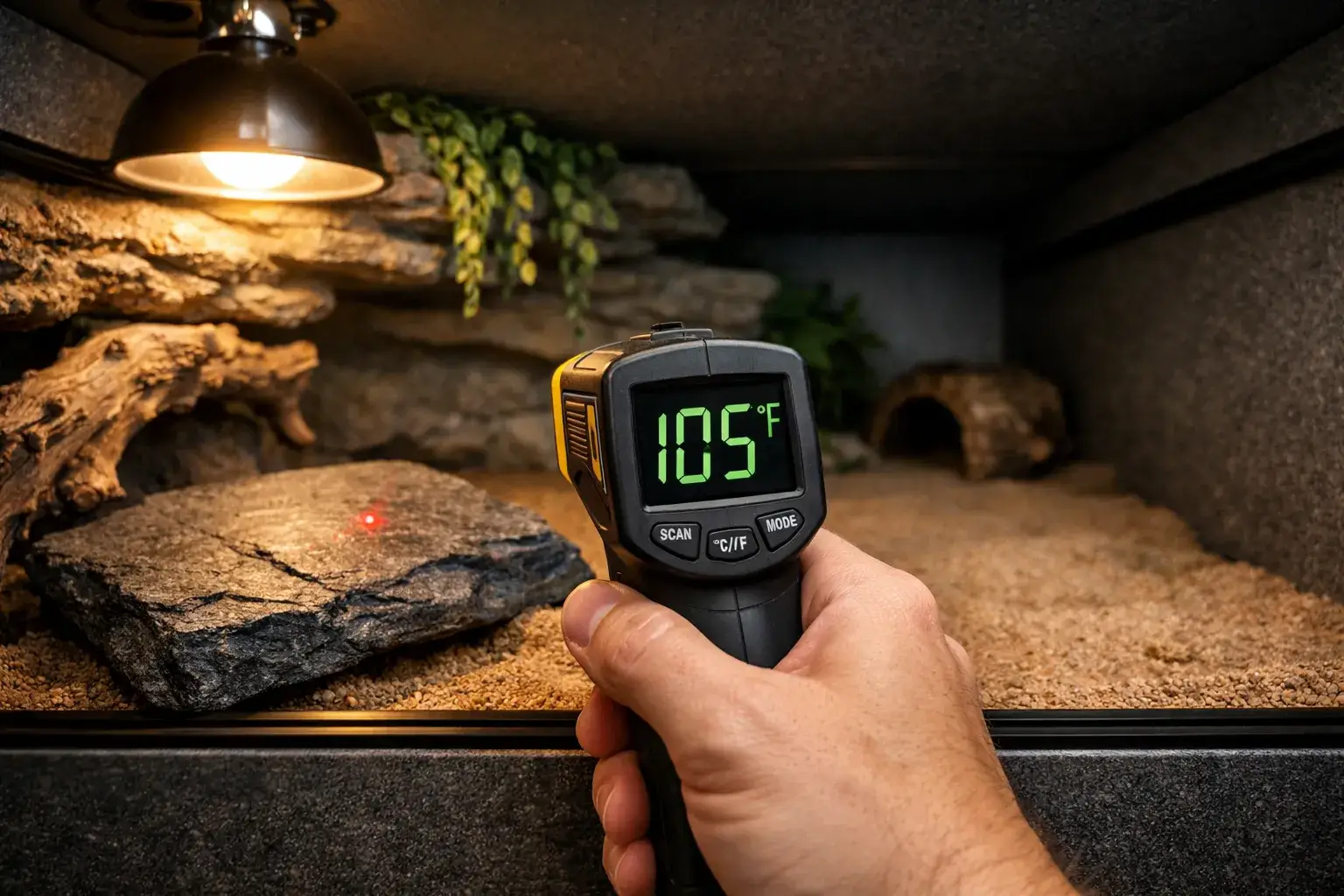
Tools: You need two Digital Probe Thermometers (one cool side, one warm side) and an Infrared Temp Gun.
-
Target: The air on the hot side should be 90°F-95°F. The surface of the basking rock should be 105°F-110°F.
5: Frequently Asked Questions (FAQ)
Common questions from keepers upgrading to a 120-gallon system.
Q: Is a 4x2x2 enclosure too big for a baby bearded dragon?
A: No. In the wild, babies live in the infinite Australian Outback. A large space is only scary if it is empty. If you put a baby in a 120 gallon reptile tank, simply add more “clutter” (fake plants, hides, branches). This breaks up the line of sight and makes them feel safe. Buying the adult size now saves you money on buying a 40-gallon now and upgrading later.
Q: Can I stack two 4x2x2 enclosures?
A: Yes! This is a core feature of the Toxirium system. With our Spacer Kit, you can stack units up to 3 or 4 high. The frame is reinforced to handle the weight of substrate and decor without sagging.
Q: Is it hard to assemble?
A: Not at all. We ship flat-packed to prevent damage and reduce shipping costs. Assembly takes about 20-30 minutes with a standard Phillips screwdriver. The panels lock together for a sturdy fit.
Q: How do I clean a PVC cage?
A: PVC is non-porous, meaning it doesn’t absorb bacteria or smells like wood does. Simply wipe it down with a reptile-safe disinfectant (like Chlorhexidine or F10SC) and a paper towel. For deep cleaning, the waterproof bottom allows you to wipe up messes easily.
6: Conclusion – Upgrade Their Life Today
We often call them “starter pets,” but a Bearded Dragon is a 15-year commitment. Keeping an intelligent, active animal in a glass box where it can barely turn around is not just outdated; it is unfair.
Upgrading to a 120 Gallon (4’x2’x2′) PVC Enclosure solves the temperature issues, stops the glass surfing, and gives your pet the dignity of a proper habitat. It is cleaner, lighter, more energy-efficient, and healthier.
Don’t wait until your dragon is sick to make the change. Build their forever home today.
Ready to upgrade?
Join thousands of happy keepers who have made the switch.
Shop the Best Bearded Dragon Cage Size (4x2x2) Now
Exclusive Reader Offer: Get 8% OFF your entire order with code TR8OFF at checkout.