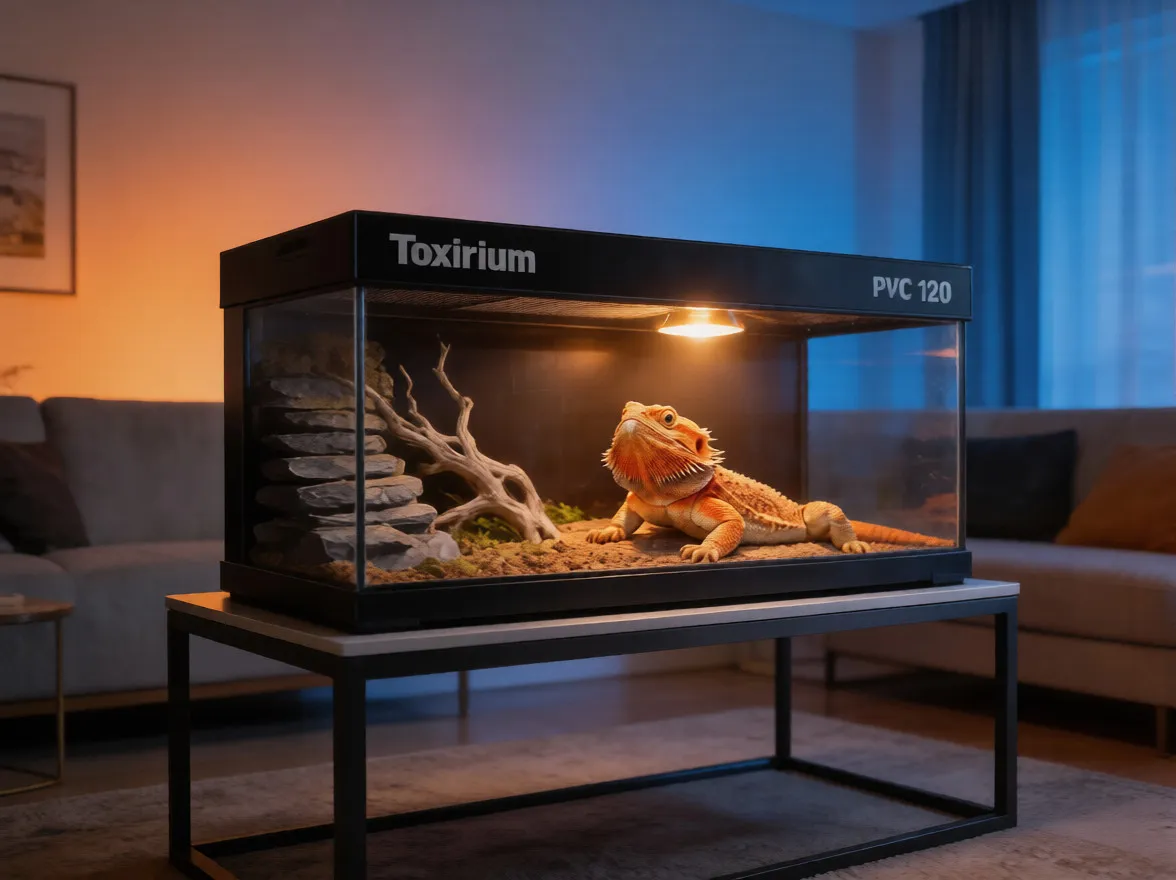
By Toxirium Team | Updated: January 2026 | Estimated Reading Time: 22 Minutes
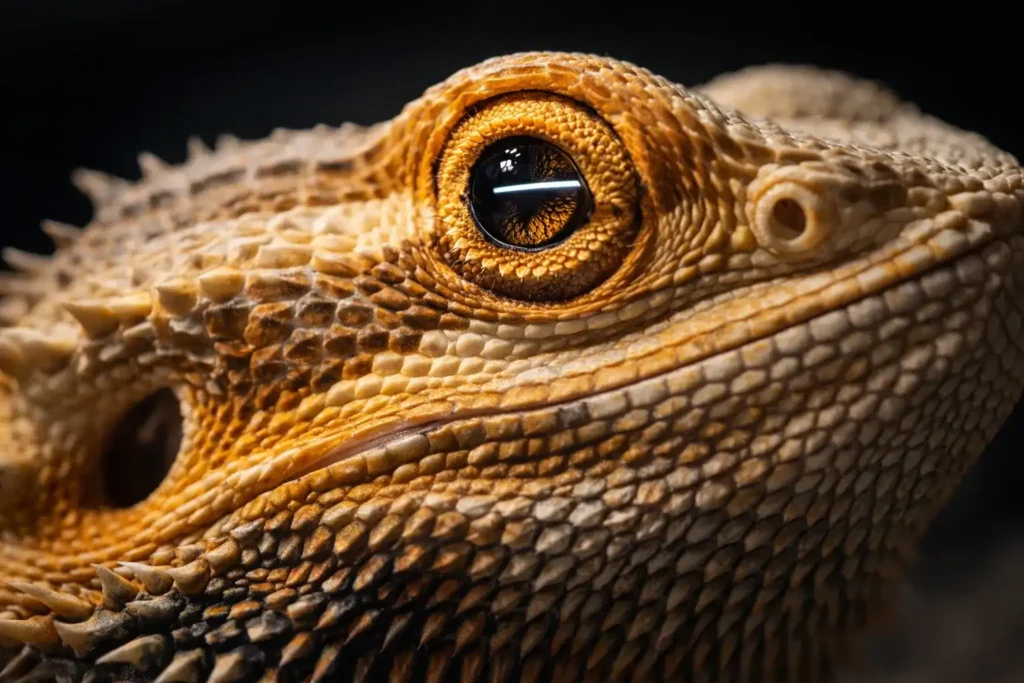
Quick Summary: The Truth About Reptile UVB
Reptile UVB lighting myths are responsible for the #1 health issue in captivity: Metabolic Bone Disease. The truth is:
Coil bulbs are often dangerous and ineffective compared to T5 HO Linear Tubes.
Mesh screens block up to 50% of UV radiation, making interior mounting essential.
Supplements (powder) are not a complete replacement for biological UVB synthesis.
“Nocturnal” does not mean “No UV.” Even geckos practice “cryptic basking.”
Distance matters: The Inverse Square Law dictates exactly how far your lamp must be.
Introduction: The Invisible Killer
You cannot see it. You cannot smell it. But if you get it wrong, your reptile’s bones will turn to rubber.
In the wild, the sun provides a complex spectrum of electromagnetic radiation that drives life. In captivity, we try to replicate a nuclear fusion reactor (the sun) with a $30 light bulb. It is a daunting task, and unfortunately, the internet is flooded with outdated, dangerous advice.
If you believe that “putting the cage near a window” is enough, or that “calcium powder replaces the sun,” you have been misled by reptile UVB lighting myths.
In 2026, reptile husbandry is governed by science, specifically the Ferguson Zone protocols utilized by leading zoos.
In this masterclass, we will dismantle the 5 most dangerous reptile UVB lighting myths using hard physics and biology. We will explain photolysis, mesh interference, and why upgrading to a Toxirium PVC Enclosure (which allows interior lighting) is the only way to guarantee your pet’s health.
Phase 1: The Hard Science – How Vitamin D3 Actually Works
Before we debunk the myths, we must understand the biology. Why do reptiles need Ultraviolet B (290-315nm)?
The Photolysis of Provitamin D3
It is not as simple as “Light hits skin = Healthy Bone.” It is a complex chemical chain reaction:
-
7-Dehydrocholesterol: This is a cholesterol precursor found in the skin cells of reptiles.
-
The Strike: When a photon of UVB energy hits this cholesterol, it breaks a chemical bond (photolysis), converting it into Pre-Vitamin D3.
-
Thermal Isomerization: This is where heat comes in. The warmth from your basking bulb converts Pre-D3 into actual Vitamin D3.
-
The Result: Vitamin D3 acts as a hormone that allows the intestines to absorb Calcium.
The Critical Takeaway: Without UVB + Heat, the calcium you feed your dragon simply passes through their body as waste. The bones starve, and the body begins to leach calcium from its own skeleton to keep the heart beating. This is Metabolic Bone Disease (MBD).
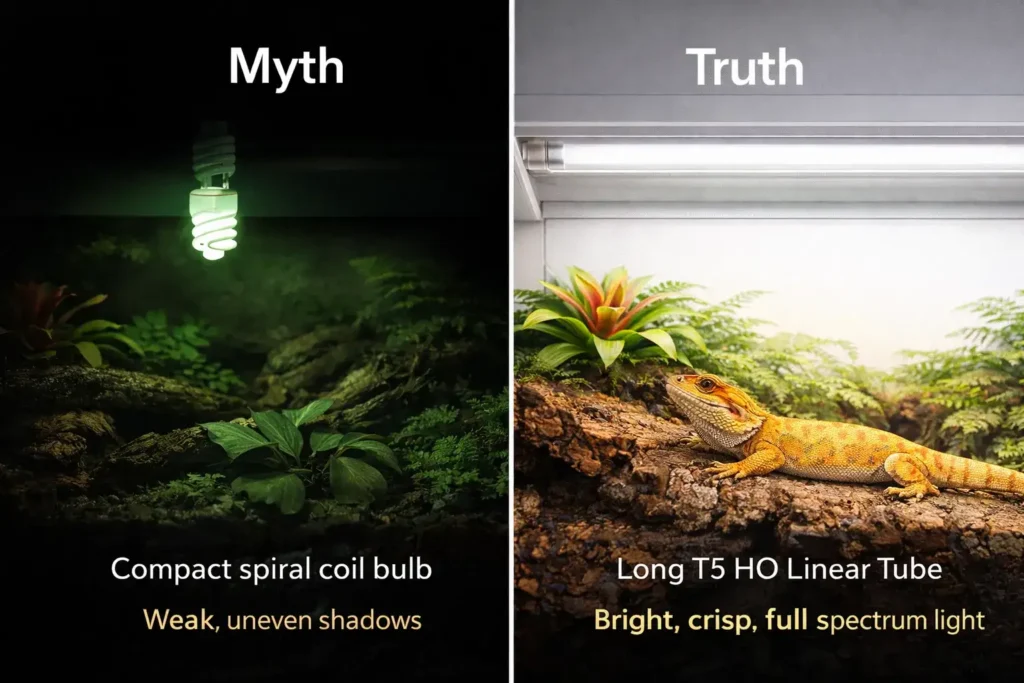
Myth #1: “Compact Coil Bulbs are Fine”
The Myth: “I bought a starter kit with a spiral (cfl) bulb. It fits in a normal lamp, so it must be good.”
The Science Debunk:
In 2026, reputable experts consider Compact Fluorescent Lamps (Coils) to be obsolete for basking species.
1. The “Spotlight” Failure
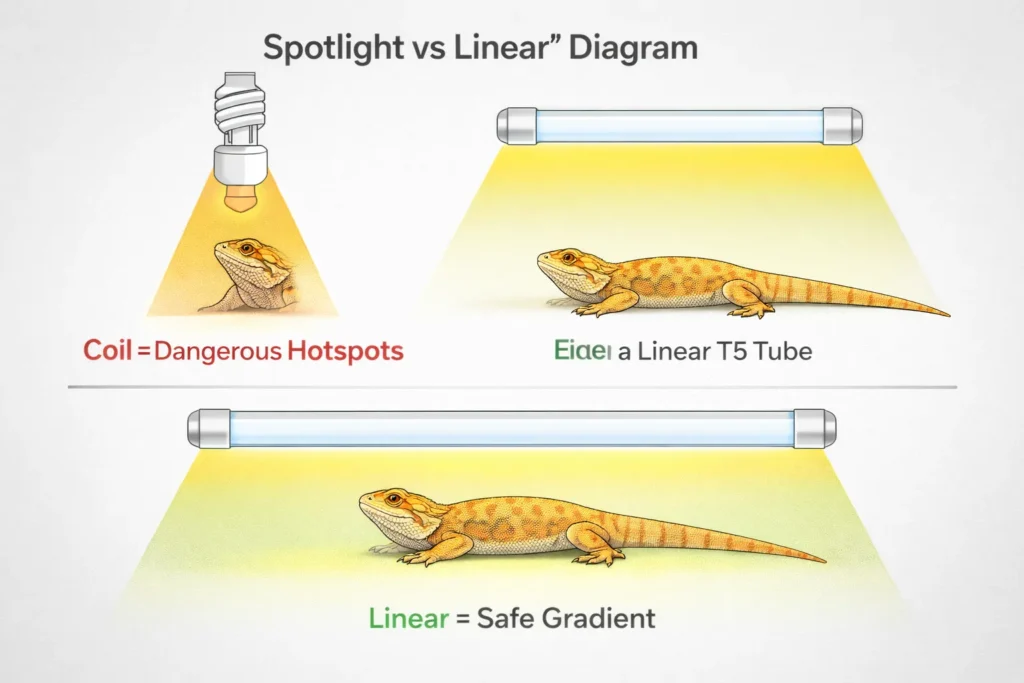
Reptiles like Bearded Dragons move. A coil bulb produces a narrow, intense beam of UV that covers only 4-6 inches.
-
The Linear Requirement: If your lizard is 20 inches long, but your UV bulb is 4 inches wide, only their head gets UV while their tail gets none.
-
The Fix: You need a Linear T5 HO Tube (like Arcadia or Reptisun) that spans 2/3rds the length of your enclosure. This ensures the entire animal receives radiation.
2. Photo-Kerato-Conjunctivitis (Snow Blindness)
Cheap coil bulbs often have poor phosphor mixes that emit dangerous spikes of UVC or extremely intense short-wavelength UVB. This can burn the reptile’s retinas, causing them to close their eyes constantly and stop eating.
Myth #2: “Mesh Screens Don’t Block That Much Light”
The Myth: “I can just rest my light fixture on top of the metal screen mesh. It shines right through.”
The Science Debunk:
This is the single most common cause of MBD in glass tank setups.
The Physics of Mesh Interference
Metal mesh acts as a Faraday cage and a physical barrier.
-
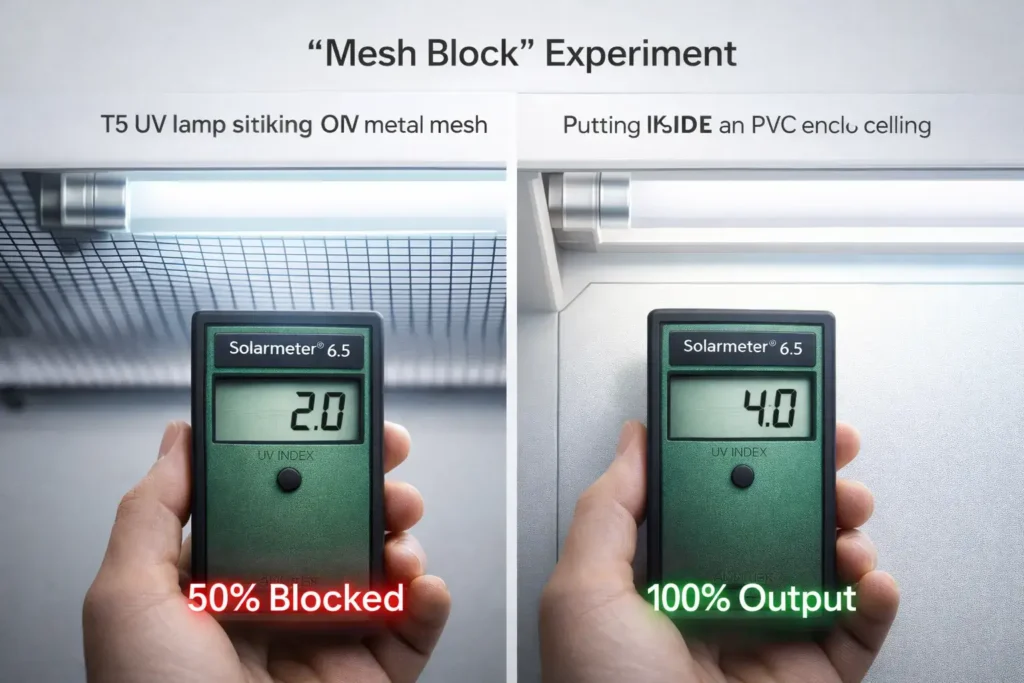
The Data: A standard “tight weave” mesh top blocks 35% to 50% of UVB radiation.
-
The Calculation: If your bulb puts out a UVI (UV Index) of 4.0, and you put it on a screen, the animal only receives a UVI of 2.0. You have accidentally cut their “sun” in half.
The Toxirium PVC Solution
This is why professional enclosures are made of PVC with solid tops.
-
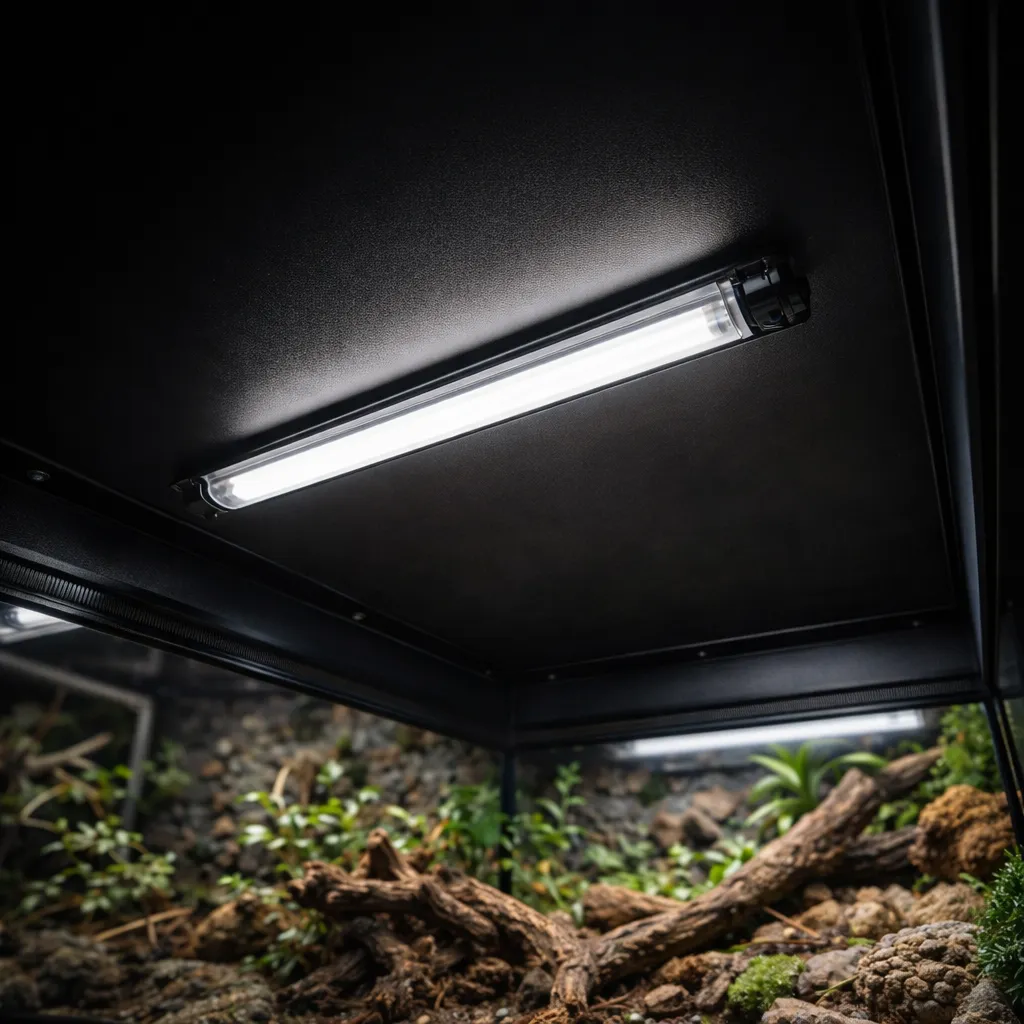
Interior Mounting: In a Toxirium 4x2x2 PVC Enclosure, you screw the T5 fixture directly into the ceiling, inside the cage.
-
Zero Loss: There is no mesh between the bulb and the lizard. They get 100% of the output you paid for.
-
Safety: The bulb is hung at the correct distance, ensuring a safe gradient.
Myth #3: “I Give Calcium Powder, So I Don’t Need Strong Lights”
The Myth: “My supplement has D3 in it. That replaces the sun.”
The Science Debunk:
There are two ways to get Vitamin D3: Endogenous (made by skin via sun) and Dietary (eaten). They are not equal.
The Overdose Risk (Toxicity)
A reptile’s body regulates Endogenous D3 perfectly. If they have enough, the skin stops making it. You cannot overdose on UVB.
-
Dietary Danger: Dietary D3 bypasses this safety valve. It is very easy to overdose a reptile on D3 powder, leading to mineralization of the organs (kidney stones).
-
Biological Preference: Studies show that many species (especially Bearded Dragons and Uromastyx) are extremely inefficient at absorbing dietary D3. They require the photolysis process to thrive.
Conclusion: Powder helps, but it is a safety net, not a replacement for a high-quality UVB tube.
Myth #4: “Any Distance is Fine as Long as it’s Bright”
The Myth: “I have a strong bulb, so I can mount it on the ceiling of my tall 4-foot cage.”
The Science Debunk:
Light does not travel forever. It follows the Inverse Square Law.
The Math
Intensity=1/Distance2-
If you double the distance from the bulb, you get only 1/4 of the energy, not 1/2.
-
The Falloff: A T5 HO bulb might give a perfect UVI of 4.0 at 12 inches. At 24 inches, that might drop to a useless UVI of 0.5.
The “Basking Stack” Necessity
This is why your enclosure setup must include an elevated basking platform. You must physically raise the animal to the correct distance from the bulb.
-
T5 HO with Reflector: Usually requires 12-15 inches of distance.
-
T8 Standard: Usually requires 6-8 inches (too close for most setups).
Myth #5: “Albino and Nocturnal Animals Don’t Need UV”
The Myth: “Leopard Geckos and Ball Pythons sleep during the day, so UV is a waste of money.”
The Science Debunk:
“Nocturnal” is a misunderstanding. Most of these animals are Crepuscular (active at dawn/dusk) or practice Cryptic Basking.
Cryptic Basking
In the wild, a Ball Python doesn’t sit in the open sun like an iguana. Instead, it exposes a small part of its body (a coil) to a sunbeam piercing through the leaves, or it sits under a rock that has been warmed by the sun.
-
The Benefit: Even low levels of UVB (Ferguson Zone 1) drastically improve the immune system, skin texture, and color of “nocturnal” species.
-
Albino Warning: Albino animals lack melanin, which protects DNA from UV radiation. They do need UV, but at much lower levels (Zone 1) to prevent skin cancer.
Phase 2: The Ferguson Zones – The 2026 Standard
So, how much UVB does your reptile need? We use the Ferguson Zones, developed by Dr. Gary Ferguson.
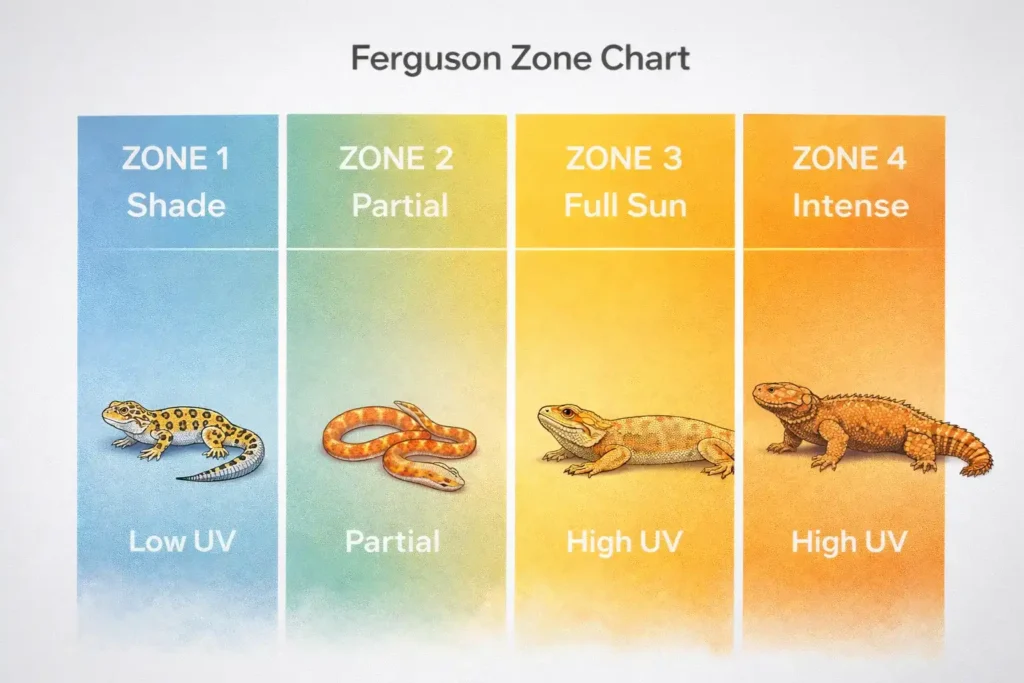
Zone 1: The “Shadow Dwellers” (UVI 0.0 – 0.7)
-
Species: Leopard Geckos, Crested Geckos, Ball Pythons.
-
Behavior: Avoid direct sunlight.
-
Lighting: ShadeDweller 7% kit or weak T5.
Zone 2: The “Occasional Baskers” (UVI 0.7 – 1.0)
-
Species: Corn Snakes, Box Turtles, Green Anoles.
-
Behavior: Seen in dappled sunlight.
Zone 3: The “Sun Worshippers” (UVI 1.0 – 2.6)
-
Species: Bearded Dragons, Sliders, Day Geckos.
-
Behavior: Bask in full sun for hours.
-
Lighting: Arcadia 12% or Reptisun 10.0 T5 HO.
Zone 4: The “Mid-Day Desert” (UVI 2.6 – 3.5+)
-
Species: Uromastyx, Chuckwallas.
-
Behavior: Active in the hottest part of the day.
-
Lighting: Arcadia 14% Dragon Lamp.
Phase 3: The “Glass Window” Myth
The Myth: “I put my tank next to the window so the sun hits it.”
The Science Debunk:
This is dangerous for two reasons:
-
The Filter: Standard window glass filters out 98% to 100% of UVB radiation. The lizard gets the light and the heat, but zero Vitamin D3.
-
The Greenhouse Effect: Glass traps heat. Direct sunlight hitting a glass tank can raise internal temperatures to lethal levels (120°F+) in minutes, killing the animal via heatstroke.
The Solution: Never rely on windows. Use controlled artificial lighting in a ventilated PVC enclosure.
Phase 4: Reflectors and Geometry
The bulb is only half the battle. The Reflector is the other half.
-
No Reflector: Light scatters 360 degrees. 50% of your UV goes up into the ceiling of the cage and is wasted.
-
Polished Aluminum Reflector: Directs that wasted energy downward. A high-quality reflector can triple (3x) the effective UV reaching your reptile.
-
Toxirium Compatibility: Our PVC enclosures are designed with flat ceilings specifically to accommodate high-end fixtures with wide reflectors, ensuring maximum efficiency.
Phase 5: Measuring the Invisible – The Solarmeter 6.5
How do you know if your bulb is still working?
UVB bulbs decay. They emit visible light long after they stop emitting UV.
-
The Estimation Method: Replace T5 bulbs every 12 months (Arcadia) or 6 months (cheaper brands).
-
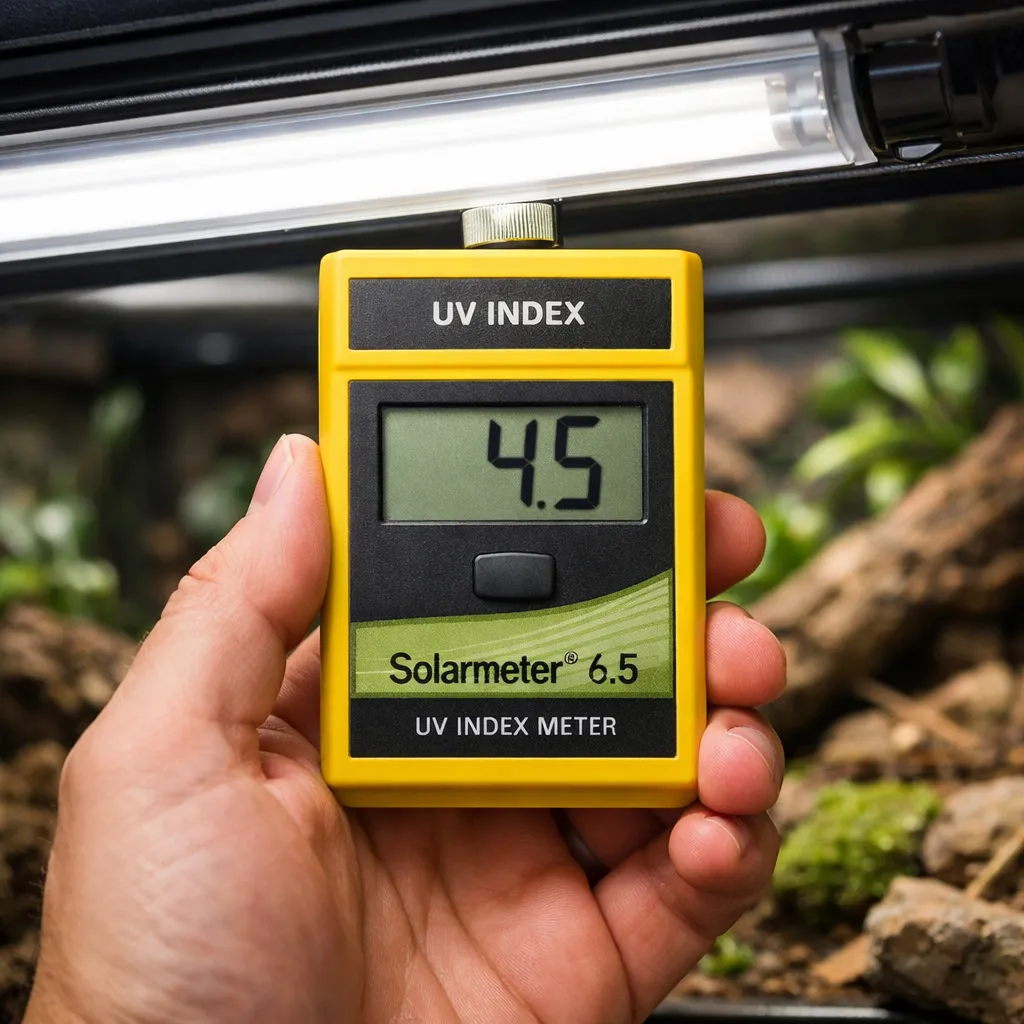
The Scientific Method: Buy a Solarmeter 6.5. This device measures the UVI (UV Index) in real-time.
-
Why buy one? It costs $250, but it saves money long-term because you don’t throw away bulbs that are still good. You verify exactly what your pet is getting.
-
Frequently Asked Questions (FAQ)
Q: Can I use a T8 bulb instead of a T5 HO?
A: T8 bulbs are older technology. They are weaker, have a flicker that reptiles can see (which stresses them), and the UV doesn’t penetrate very far (only effective at 6-8 inches). T5 HO (High Output) is the 2026 standard because it is brighter, flicker-free, and effective at 12-18 inches, making it perfect for 4x2x2 enclosures.
Q: Does the “Reptile UVB Lighting Myths” regarding windows apply if the window is open?
A: If the window is wide open with no screen, yes, they get UV. However, this is risky due to drafts, escape risks, and unpredictable temperature spikes. It is never a stable replacement for a controlled T5 fixture.
Q: How do I know if my bulb has stopped producing UV?
A: You cannot tell by looking. The visible light works long after the UV phosphorus degrades. You must either replace the bulb every 12 months (for high-quality German brands like Arcadia) or use a Solarmeter 6.5 to test it monthly.
Q: Do Toxirium enclosures come with light fixtures?
A: Toxirium enclosures are designed with a solid PVC ceiling that accepts almost all standard 24″ or 36″ T5 HO fixtures. We provide the structural integrity to mount them safely inside, which is the key to defeating the “Mesh Block” myth.
Conclusion: Stop Guessing, Start Measuring
UVB is not a “luxury add-on.” It is the fuel that powers your reptile’s life. Relying on reptile UVB lighting myths like “calcium powder is enough” or “mesh doesn’t matter” is gambling with your pet’s health.
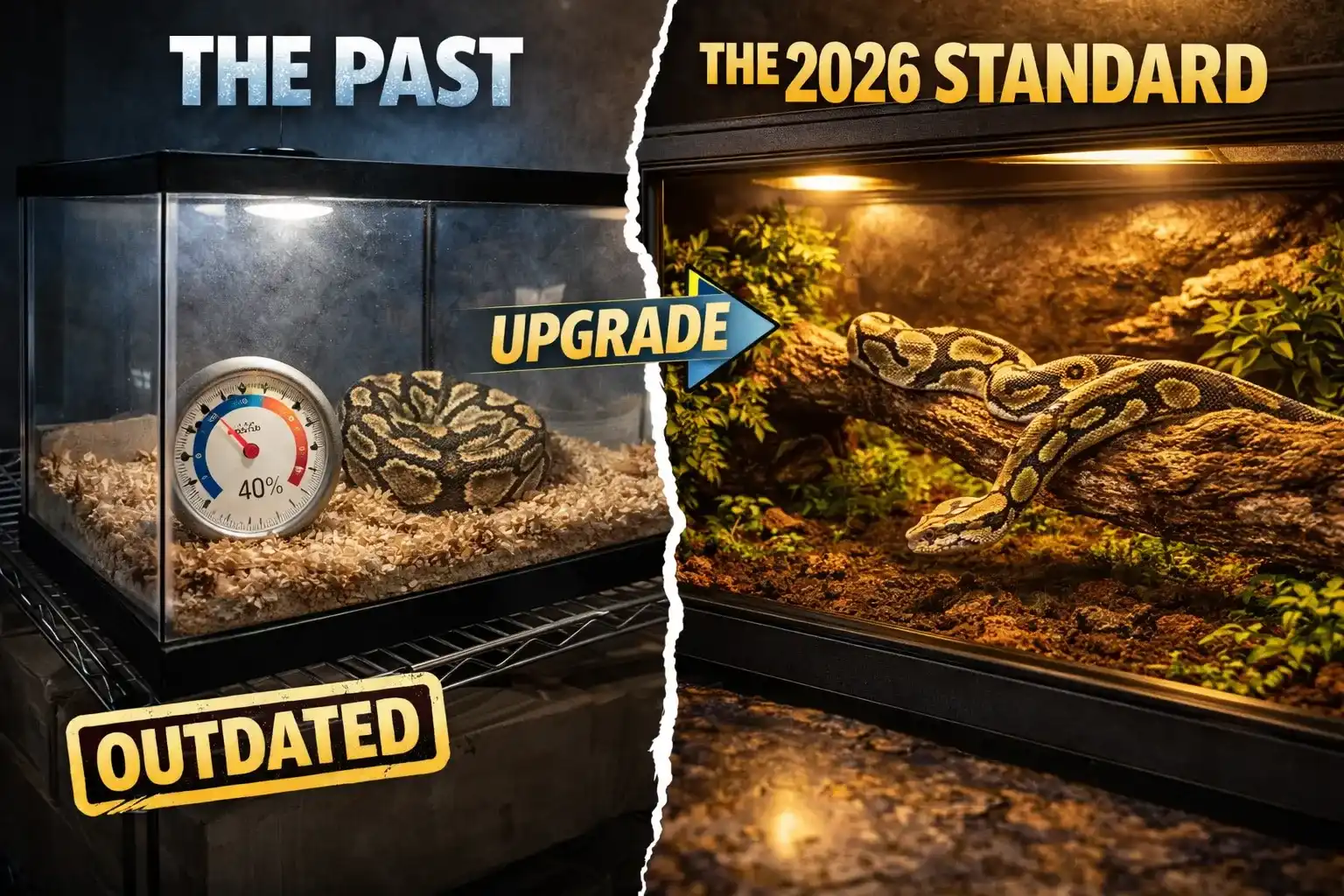
In 2026, the standard is clear:
-
Use Linear T5 HO tubes.
-
Mount them inside the enclosure (using a Toxirium PVC cage).
-
Match the Ferguson Zone to your species.
Don’t let your dragon live in the dark. Give them the sun they deserve.
Ready to install proper lighting?
You need a habitat that supports it.
Shop Toxirium PVC Enclosures (Interior Mount Ready)
Stop blocking your UV with mesh screens. Upgrade to PVC today. Use code TR8OFF for 8% OFF.