By Toxirium Team | Updated: January 2026 | Estimated Reading Time: 22 Minutes
Quick Summary: What is a Bioactive Reptile Enclosure?
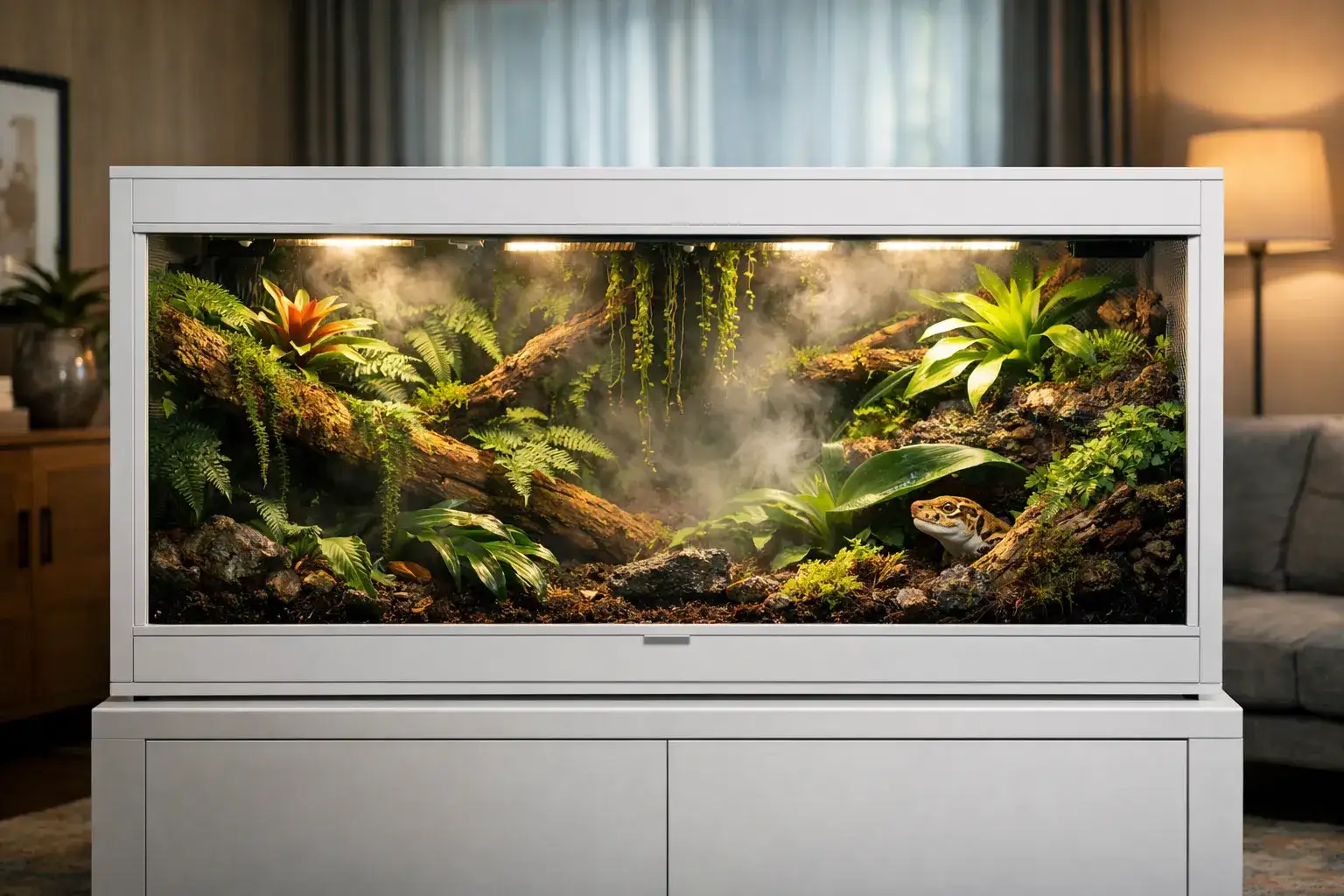
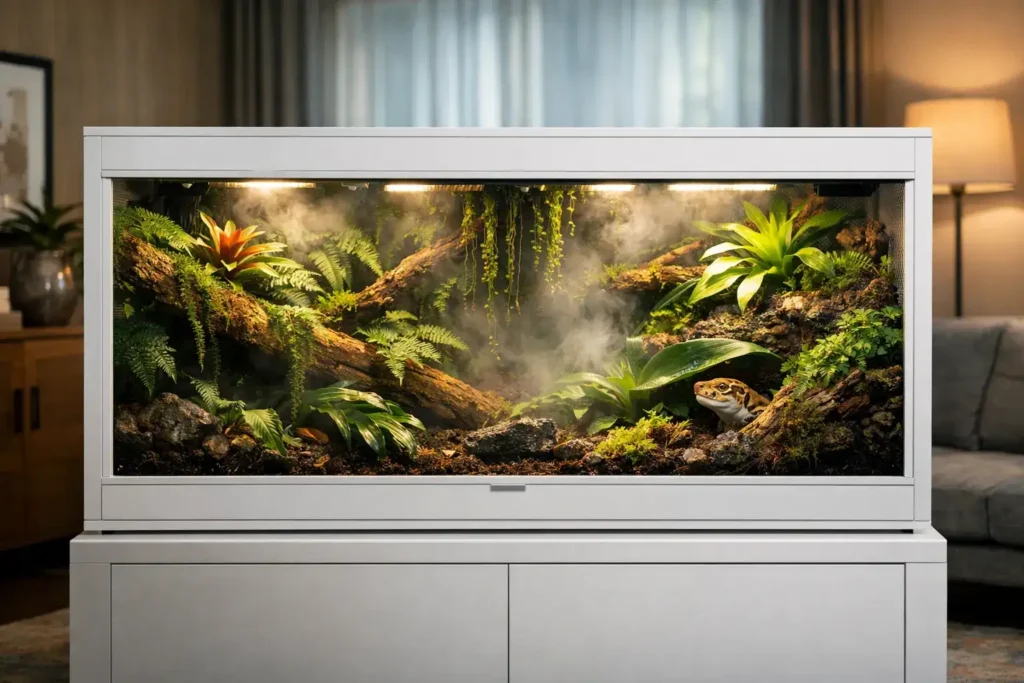
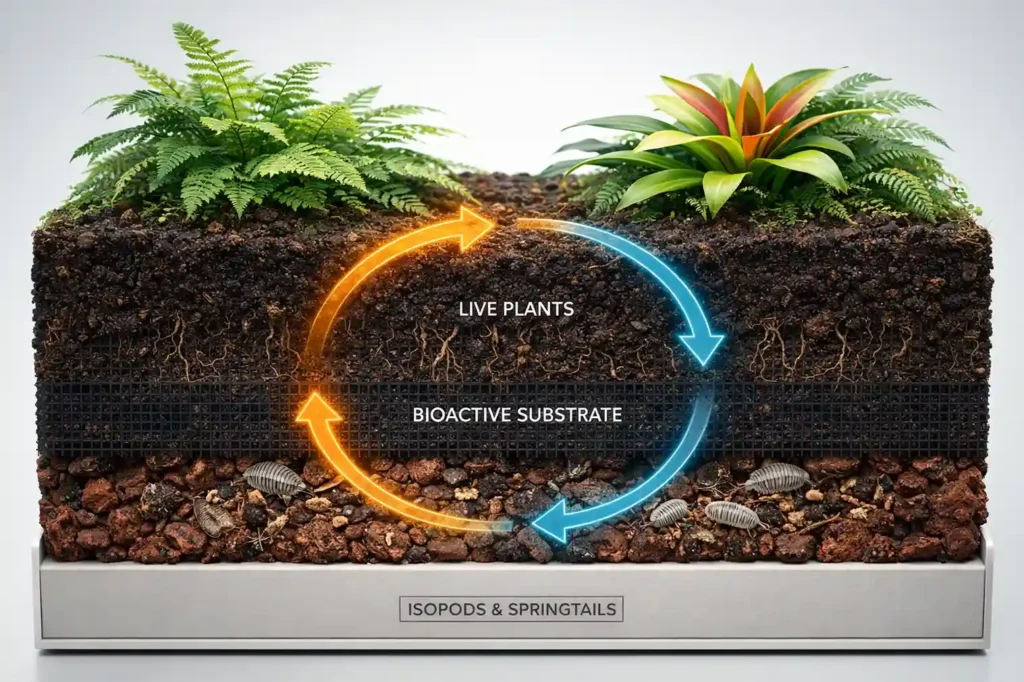
A bioactive reptile enclosure is a self-sustaining micro-ecosystem that replicates the biological cycles of nature. It relies on three pillars: Live Plants (for oxygen and filtration), Bioactive Substrate (living soil), and a Cleanup Crew (Isopods and Springtails) that break down animal waste into organic fertilizer. Unlike sterile setups, a bioactive habitat creates a stable Nitrogen Cycle, reducing maintenance while boosting animal immunity.
Introduction: From “Sterile Box” to “Living World”
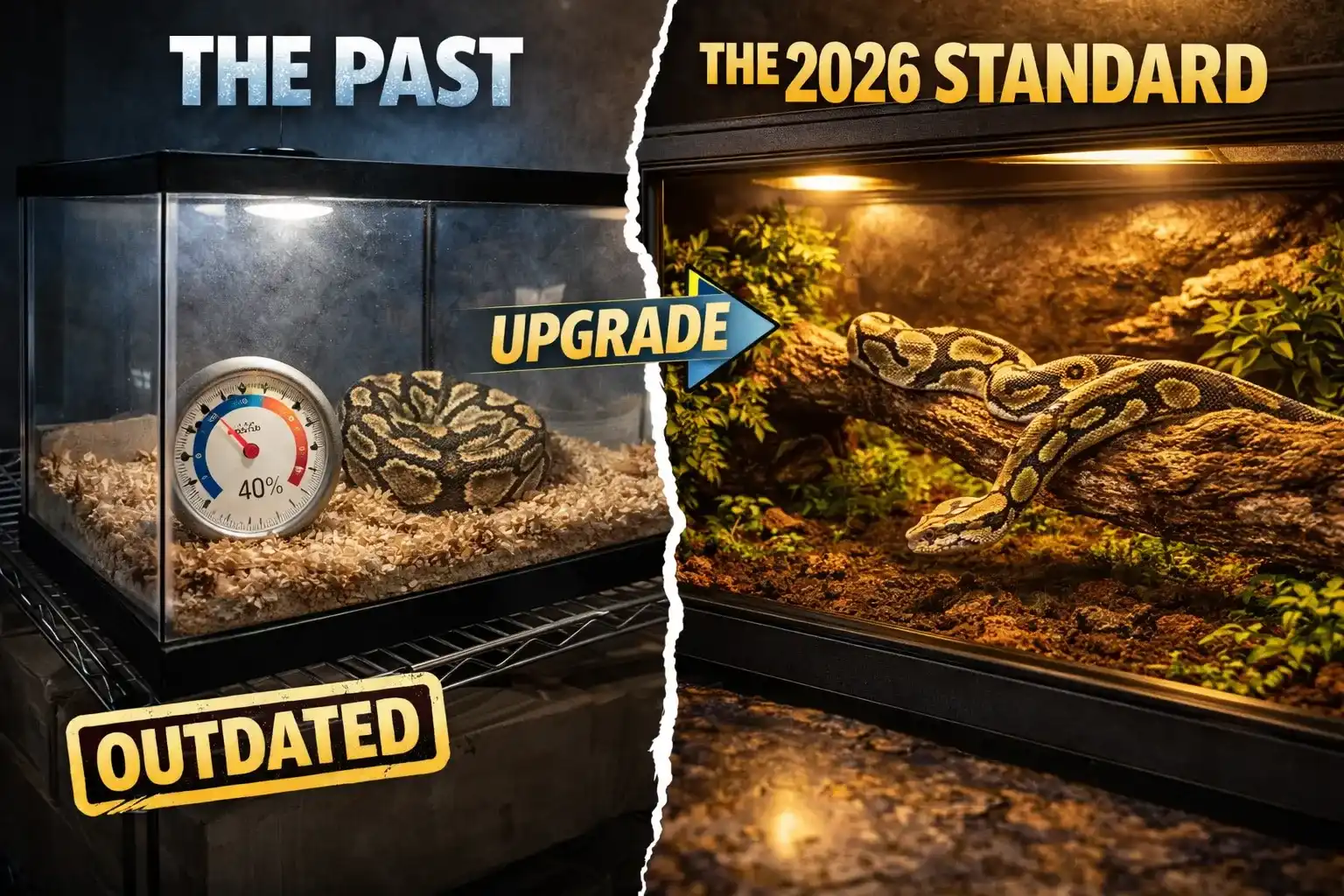
For decades, the standard for reptile keeping was “clinical sterility.” But in 2026, we know better. The ultimate goal for modern keepers is to create a bioactive reptile enclosure—a living, breathing slice of nature.
Unlike sterile setups, a bioactive reptile enclosure relies on a complex biological engine to clean itself. It is the difference between keeping a pet in a solitary confinement cell versus a slice of the Amazon Rainforest.
In the wild, reptiles do not live on paper towels. They live in complex, living environments teeming with bacteria, fungi, insects, and plants. They have evolved over millions of years to interact with this microbiome. By stripping it away, we aren’t just making cleaning easier; we are depriving their immune systems of necessary stimulation.
Enter the Bioactive Reptile Enclosure.
Going bioactive is not just an aesthetic choice; it is a paradigm shift. It is the difference between keeping a pet in a solitary confinement cell versus a slice of the Amazon Rainforest or the Australian Outback.
In this hardcore scientific guide, we will move beyond the basics. We will explore the Nitrogen Cycle, the specific biology of Isopods, and why a waterproof PVC enclosure is the only vessel capable of holding a living, breathing ecosystem.
Phase 1: The Hard Science – The Nitrogen Cycle
To understand the benefits of a bioactive reptile enclosure, you must stop thinking like a zookeeper and start thinking like a biochemist. The magic of bioactive is not magic; it is the Nitrogen Cycle.
1. The Problem: Waste Accumulation
In a sterile tank (paper towels), when your reptile defecates, that waste sits there. It is organic matter. As it breaks down, it releases Ammonia, which is toxic. You must physically remove it, or the animal gets sick.
2. The Solution: The “Forest Floor Engine”
In a bioactive setup, the soil is alive. Here is the process:
-
Step 1 (Waste): The reptile produces waste (Ammonia source).
-
Step 2 (The Cleanup Crew): Isopods and Springtails physically consume the waste and decaying plant matter. They break it down into smaller particles.
-
Step 3 (Nitrification): Beneficial bacteria (Nitrosomonas and Nitrobacter) in the substrate convert the Ammonia into Nitrites, and then into Nitrates.
-
Step 4 (Uptake): Live plants absorb the Nitrates through their roots as fertilizer to grow new leaves.
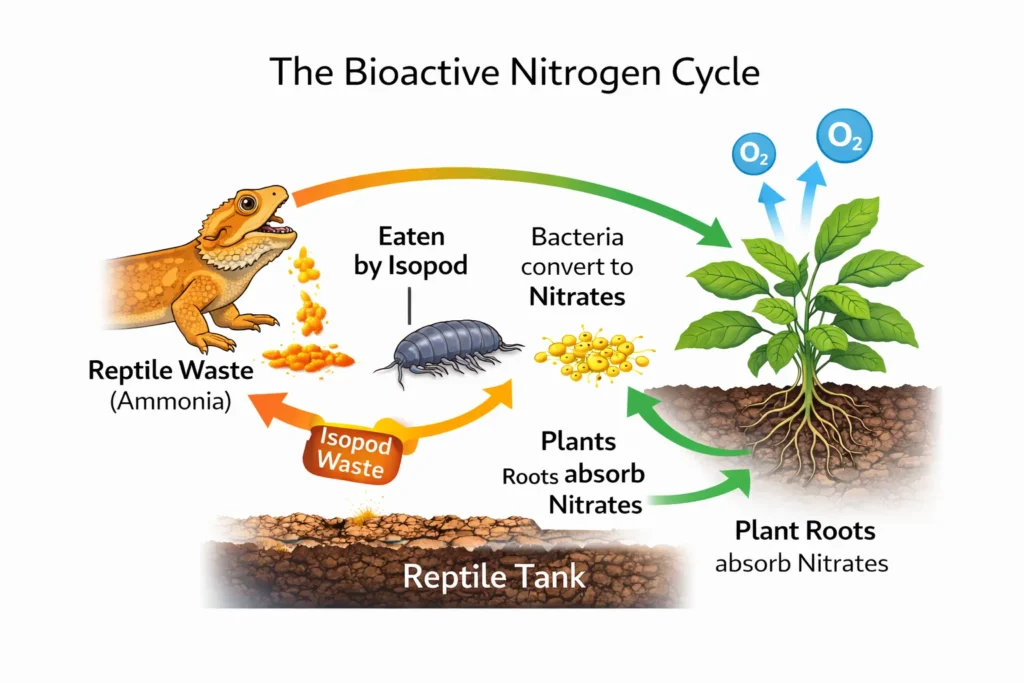
The Result: You have turned toxic poop into lush plant growth. This is a closed-loop system.
Phase 2: The Workforce – Isopods and Springtails
Often called the “Cleanup Crew” (CUC), these micro-invertebrates are the engine of your bioactive reptile enclosure.
1. Springtails (Collembola) – The Mold Eaters
Springtails are tiny, hexapods (not technically insects) that thrive in humidity.
-
The Function: Their primary diet is fungi and mold. In a humid tank, mold is inevitable. Without Springtails, mold would overtake your substrate. With them, mold is eaten before you even see it.
-
The Scale: A healthy colony contains thousands of invisible workers, keeping the soil fresh.
2. Isopods (Porcellio, Armadillidium) – The Heavy Lifters
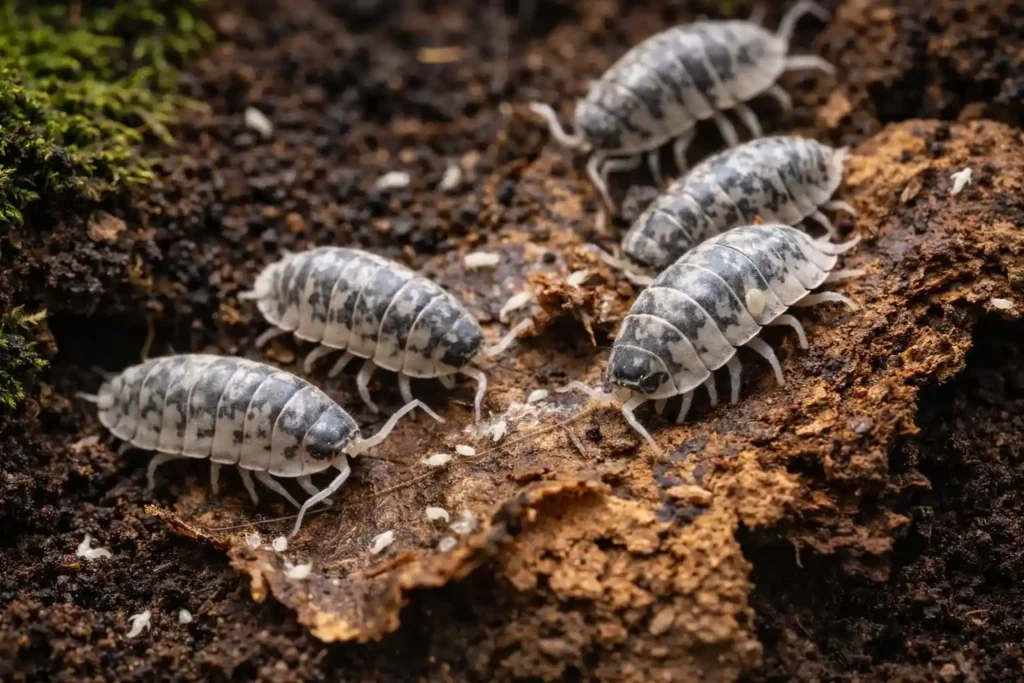
Commonly known as Roly Polys or Woodlice.
-
The Function: They are detritivores. They eat the “big stuff”—fallen leaves, shed snake skin, and fecal matter. They also aerate the soil as they burrow, preventing the substrate from becoming anaerobic (stagnant).
-
Selection Matters:
-
Tropical (Ball Pythons): Use “Dwarf White” or “Powder Orange” Isopods.
-
Arid (Bearded Dragons): Use “Giant Canyon” Isopods that can tolerate drier soil.
-
Phase 3: The Lungs – Live Plants
In a bioactive reptile enclosure, plants are not decoration. They are life support.
1. Air Filtration (VOC Reduction)
Reptile enclosures can accumulate Volatile Organic Compounds (VOCs) and stale air. Live plants undergo photosynthesis, absorbing CO2 and releasing pure Oxygen. They literally scrub the air your pet breathes.
2. Humidity Regulation (Transpiration)
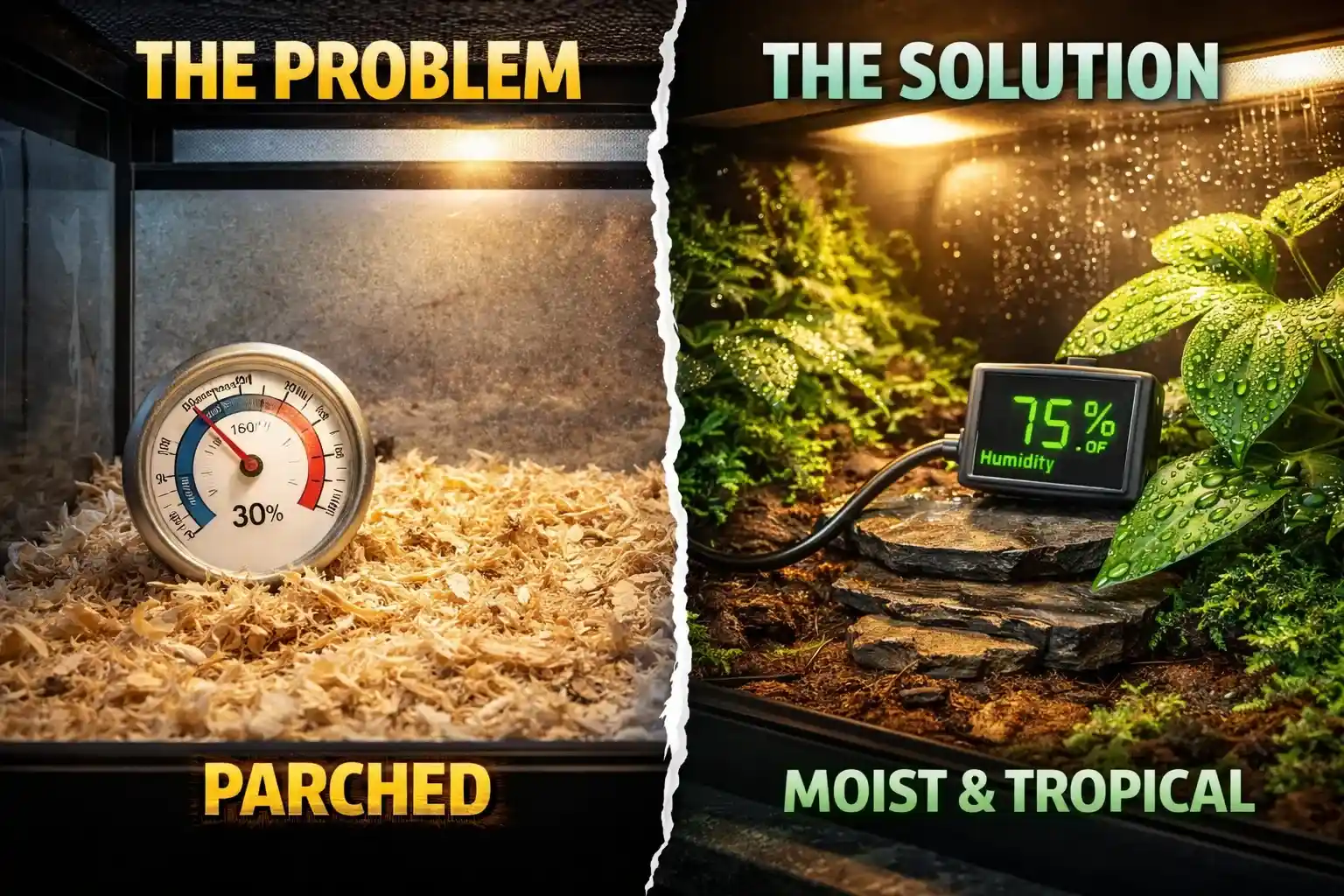
As discussed in our Humidity Guide, maintaining stability is hard.
-
The Science: Plants release water vapor through stomata in their leaves (transpiration). A bioactive tank with dense foliage acts as a self-regulating humidifier. It creates a stable microclimate that mechanical foggers cannot replicate.
3. Psychological Security
Plastic plants feel fake. They have sharp edges and smell like chemical dye. Live plants provide soft cover, changing scents, and natural textures. This enrichment reduces stress behaviors like glass surfing.
Phase 4: Structural Engineering – The Substrate Stack
You cannot just dump dirt from your backyard into a box. That brings in parasites. A proper bioactive reptile enclosure requires a specific engineering stack.
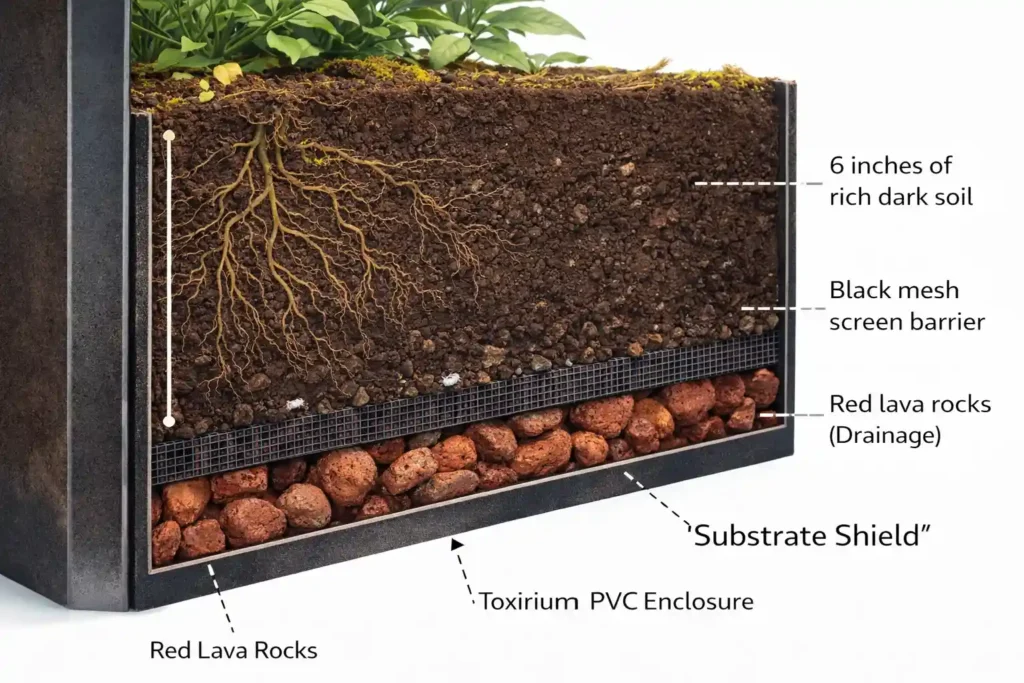
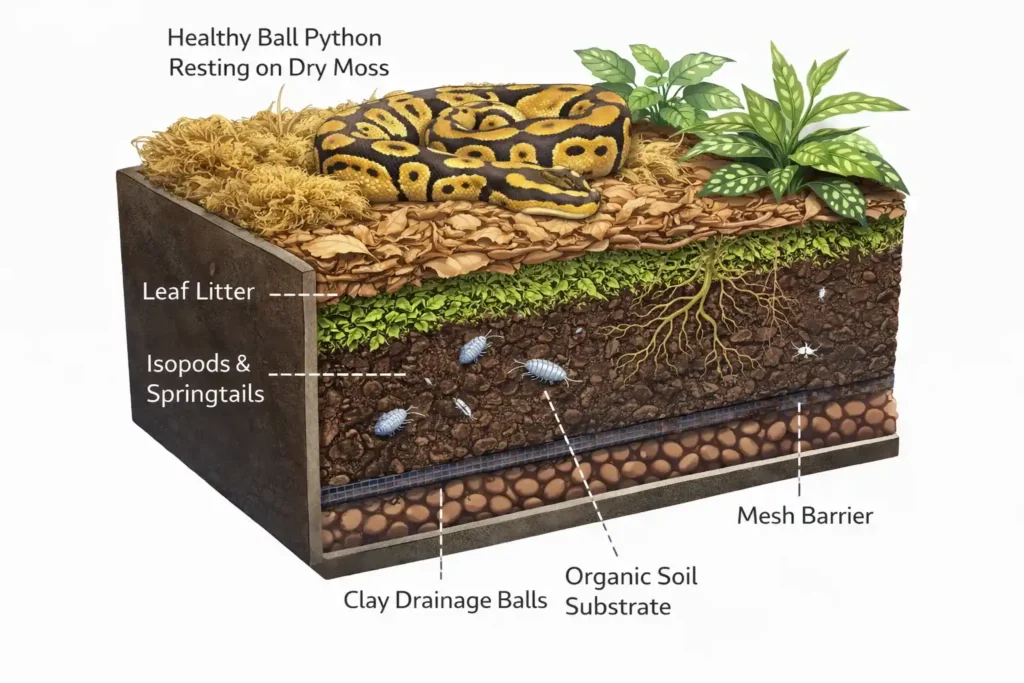
Layer 1: The Drainage Layer (The Safety Net)
-
Material: Clay Hydroballs (LECA) or Lava Rock.
-
Depth: 1-2 inches at the bottom.
-
Function: Water flows through the soil and settles here. This prevents the soil from sitting in stagnant water, which causes root rot and anaerobic bacteria buildup (which smells like rotten eggs).
Layer 2: The Mesh Barrier
-
Material: Fiberglass window screen or landscape fabric.
-
Function: Prevents the dirt from falling into the drainage layer while allowing water to pass through.
Layer 3: The Bioactive Substrate (The ABG Mix)
The “Atlanta Botanical Gardens” (ABG) mix is the gold standard.
-
Recipe: Tree Fern Fiber, Sphagnum Moss, Charcoal, Orchid Bark, and Peat Moss.
-
Why Charcoal? It binds toxins and impurities in the soil.
-
Why Sphagnum? It holds the hydration for the Isopods.
Phase 5: Material Science – Why Glass Fails Bioactive
This is where the equipment choice becomes critical. A fully loaded bioactive reptile enclosure is heavy and wet.
1. The Weight Problem
Once you add drainage layers, 6 inches of wet soil, rocks, and wood, a 120-gallon setup can weigh 300+ lbs.
-
Glass: Standard glass aquarium bottoms are not rated for this dynamic load. They often crack under the pressure of the rocks.
-
Toxirium PVC: Our enclosures are built from 1/2 inch high-density PVC. The floor is rigid and reinforced. It can handle the weight of a full ecosystem without bowing.
2. The Leak Problem
Glass tanks are sealed with silicone. Over time, the acids in the bioactive soil eat away at the silicone seal, leading to catastrophic leaks.
-
Toxirium PVC: Our enclosures are chemically welded and waterproof. They are designed to hold wet substrate for 10+ years without degrading.
3. The “Substrate Shield”
Most glass tanks have doors that open near the bottom, leaving only 1-2 inches for dirt.
-
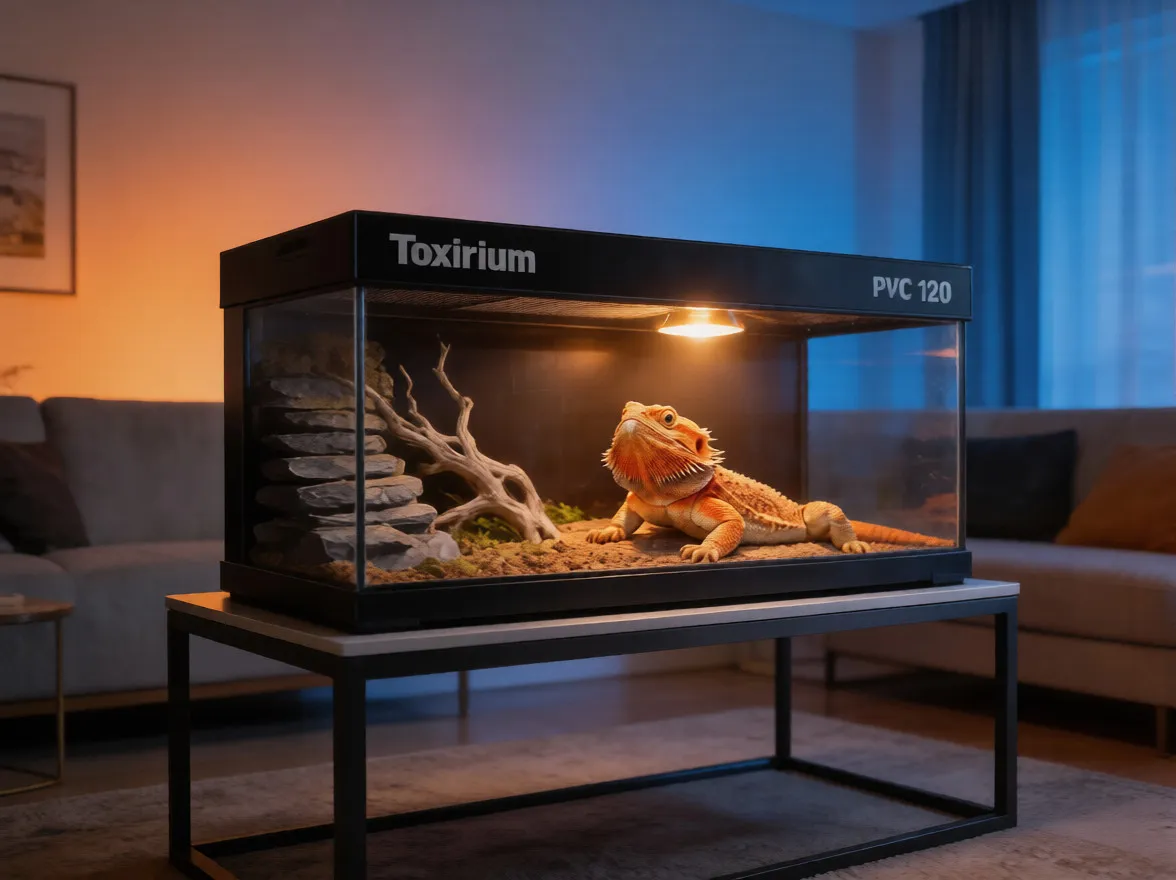
The Toxirium Advantage: Our 120 Gallon PVC Enclosure features a specifically designed 4-inch to 6-inch Substrate Shield (the solid lip below the door). This allows you to build the deep soil layers required for a bioactive system without soil spilling out onto your carpet.
Phase 6: Maintenance – The Myth of “Zero Maintenance”
Let’s be clear: Bioactive is Low Maintenance, not No Maintenance.
What you STOP doing:
-
No more full substrate changes every month.
-
No more scrubbing poop daily (the bugs handle the small stuff).
-
No more constant misting (the soil holds humidity).
What you START doing:
-
Watering: You are now a gardener. You must water the corners to keep the drainage layer active.
-
Feeding the Soil: You need to add “Leaf Litter” (dried oak/magnolia leaves) regularly. The Isopods eat the leaves. If they run out of leaves, they might try to nibble your lizard (rare, but possible if starving).
-
Pruning: Your plants will grow! You need to trim them back.
Phase 7: Arid vs. Tropical Bioactive
“Bioactive” isn’t just for tropical frogs. You can do it for desert species too.
Tropical (Ball Pythons / Geckos)
-
Soil: High organic content (ABG Mix).
-
Plants: Pothos, Ferns, Philodendrons.
-
Crew: Dwarf White Isopods.
Arid (Bearded Dragons / Uromastyx)
-
Soil: Terra Sahara Mix (Topsoil + Excavator Clay + Sand).
-
Plants: Spineless Prickly Pear, Aloe Vera, Elephant Feed.
-
Crew: Giant Canyon Isopods and Mealworm Beetles (the beetles act as cleaners).
-
Note: The “Drainage Layer” is optional for arid setups, as you water less frequently.
Frequently Asked Questions (FAQ)
Q: How long does a bioactive setup need to cycle before adding the animal?
A: Ideally, 3-4 weeks. This allows the Isopods and Springtails to breed and establish a population. It also gives the plants time to root firmly into the soil so your reptile doesn’t knock them over immediately.
Q: Will my reptile eat the Cleanup Crew?
A: Sometimes. Bearded dragons might snack on a large Isopod. This is fine; it’s a natural, high-calcium snack! As long as you have plenty of leaf litter and hiding spots (cork bark) for the bugs, the population will survive the occasional predation.
Q: Can I use soil from my backyard?
A: No. Backyard soil contains unknown parasites, fertilizers, pesticides, and predatory bugs (like ants or centipedes) that can hurt your pet. Always use sterilized organic topsoil or reptile-specific commercial mixes.
Q: Is bioactive safe for Ball Pythons with scale rot?
A: Actually, it can help prevent it. Scale rot comes from sitting on wet, dirty bedding. In a functioning bioactive reptile enclosure, the drainage layer keeps the top soil dry while the humidity stays high. Plus, the Springtails eat the mold/bacteria that cause the rot.
Conclusion: The Ultimate Enrichment
Why go through all this effort? Why buy the lights, the soil, and the bugs?
Because it brings out the wild in your pet.
When you put a reptile in a bioactive reptile enclosure, their behavior changes. They dig. They hunt. They smell the wet earth. They interact with plants. We see a drastic reduction in lethargy and stress.
You are no longer just a “pet owner” cleaning a cage. You are the custodian of a living world.
Ready to build your ecosystem?
You need a vessel that can handle the earth.
Shop the Bioactive-Ready 4x2x2 PVC Enclosure
Featuring waterproof PVC floors and a deep substrate shield. Use code TR8OFF for 8% OFF.