
Dr. Marcus Thorne, PhD
Ensuring every ToxiRium enclosure meets strict biological standards for ventilation, thermal retention, and animal safety.


Science Meets Husbandry
My philosophy is simple: Reptiles are not decorations; they are complex biological organisms.
In my 20 years of research, I've found that the primary cause of reptile illness is improper housing. Glass terrariums act as thermal conductors, leaking heat and making humidity control nearly impossible. That is why I joined ToxiRium—to engineer a habitat that works for the animal, not against it.
Credentials & Education
- PhD, Zoology (Herpetological Physiology) – University of Florida
- MSc, Ecology & Evolutionary Biology
- Consultant for Zoo Habitat Design (2010-Present)
- Active Member, Association of Reptile and Amphibian Veterinarians (ARAV)
The Science of Homeostasis
Choosing the right material ensures biological stability for your specific species.
| Feature | Premium Glass Habitats | ToxiRium PVC Habitats |
|---|---|---|
| Viewing Experience | 360° Clarity: Best visibility for observation and beautiful display. | Opaque Privacy: Mimics natural burrows to reduce animal stress. |
| Thermal Management | Rapid Dissipation: Great for arid species needing cool nights. | Superior Insulation: Ideal for tropical species needing stable heat. |
| Humidity Dynamics | High Ventilation: Perfect for species requiring dry, airy climates. | Moisture Stable: Holds humidity effortlessly for jungle species. |
| Keeper Lifestyle | Solid & Sturdy: Scratch-resistant and durable for long-term displays. | Light & Stackable: Easy to move and perfect for vertical space saving. |
Engineered by Dr. Thorne
Every vent, screw, and panel placement is calculated for biological efficiency.
The "Chimney Effect" Ventilation
I positioned the side vents to pull cool air in while pushing warm air out, ensuring fresh O2 exchange without losing crucial humidity.
Visual Security Barrier
Our ToxiRium PVC material is opaque on three sides. This mimics the security of a burrow or rock crevice, significantly reducing stress in Ball Pythons and Dragons.
Stacking Integrity
Designed to hold up to 100lbs safely. Vertical stacking allows you to expand your collection without sacrificing floor space.

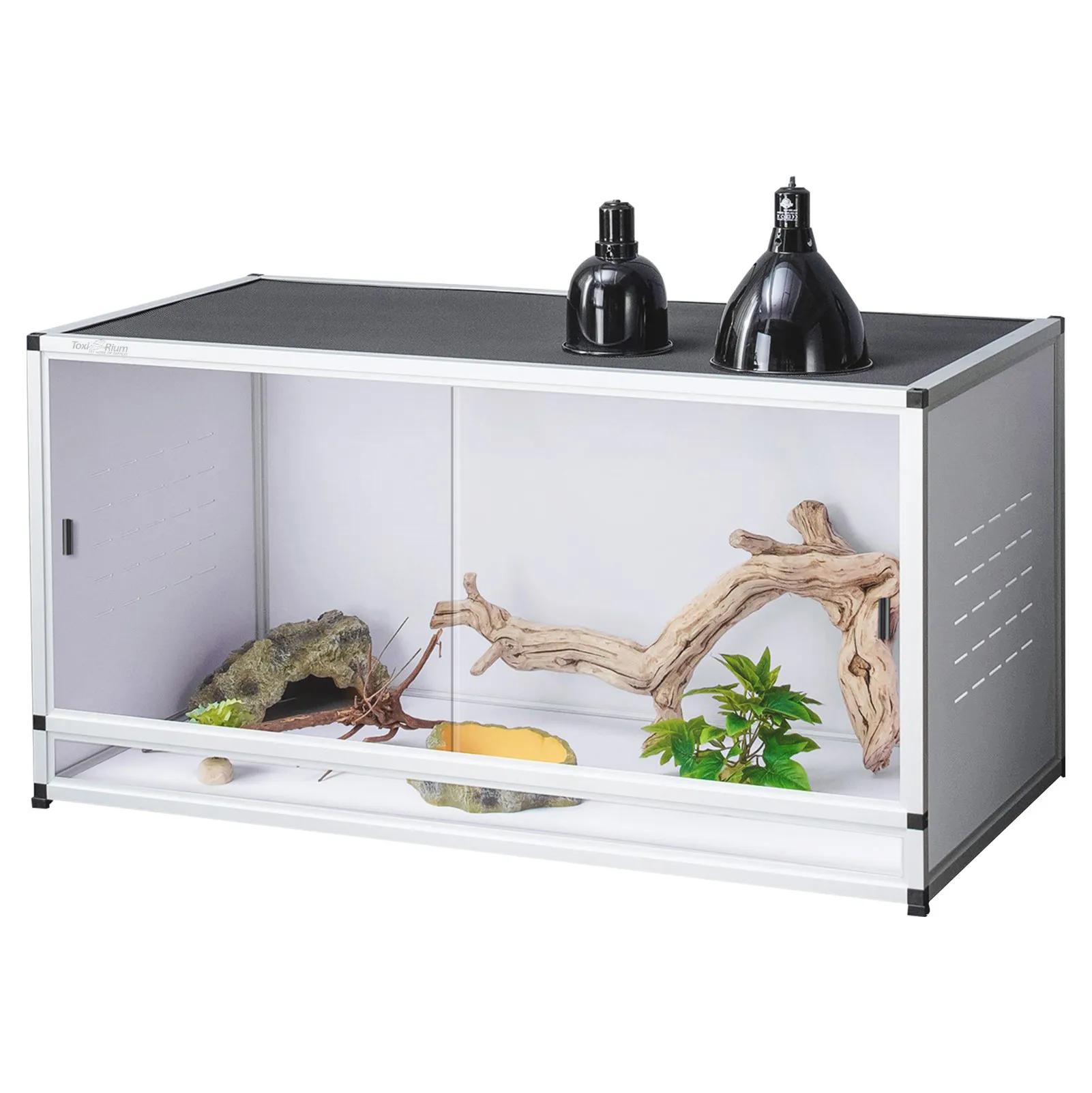
Doctor Approved Setups
High-performance enclosures engineered for professional herpetological husbandry.
Ask Dr. Thorne
Common questions about habitat engineering.
For adults, 4x2x2 (120 Gallons) is the absolute minimum requirement for health.
ToxiRium PVC is non-porous and retains heat better than wood.
Yes, ToxiRium PVC is fire-retardant. Always use a cage.
Yes, our pin-and-slot system takes under 30 minutes to set up.
Use veterinary-grade disinfectant; PVC won't absorb chemicals.
No, we use internal support pillars to hold up to 100lbs safely.
Only for bioactive setups to seal the bottom seams perfectly.
No, our high-density PVC is lead-free and phthalate-free.